Understanding How Mining Pools Work
Mining pools play a central role in cryptocurrency mining by allowing multiple miners to combine their computational power and share rewards. For many participants, this approach offers a more stable earning model than solo mining, where payouts can be unpredictable. Understanding how mining pools work is essential for evaluating their efficiency, reliability, and overall suitability.
At their core, mining pools coordinate thousands of individual contributions toward the same goal: solving the cryptographic tasks required to add new blocks to a blockchain. Once a block is mined, rewards are divided according to predefined rules that reflect each miner’s contribution.
The basic operating model
A mining pool acts as a coordination layer between miners and the blockchain network. Instead of working independently, participants connect to the pool’s server and receive smaller units of work, often referred to as shares. These shares prove that a miner has contributed processing power, even if they did not solve the full block on their own.
This model gives miners more regular payouts and helps pools maintain a predictable operating structure. The larger and more efficient the pool, the better it can smooth reward volatility for participants.
Common pool structures
Mining pools are not all organized in the same way. The most common structures include:
- Centralized pools: managed by one operator that assigns work, tracks performance, and handles payouts.
- Decentralized pools: built around peer-to-peer coordination, reducing reliance on a single controlling party.
- Hybrid pools: combine centralized management with selected decentralized mechanisms for distribution or security.
Centralized pools are generally easier to use and manage, while decentralized models can reduce some centralization risks. Hybrid approaches aim to balance convenience with resilience.
How work is distributed
Efficient work distribution is one of the most important parts of pool operations. The pool server breaks large computational tasks into smaller assignments and sends them to connected miners. This allows the pool to use available hash power more effectively and avoid unnecessary duplication of effort.
As miners complete shares, the server collects and records them. Those submissions help the pool measure each miner’s contribution and, when successful, support the process of finding a valid block. A well-run distribution system improves efficiency and helps maintain steady participation.
Reward systems used by mining pools
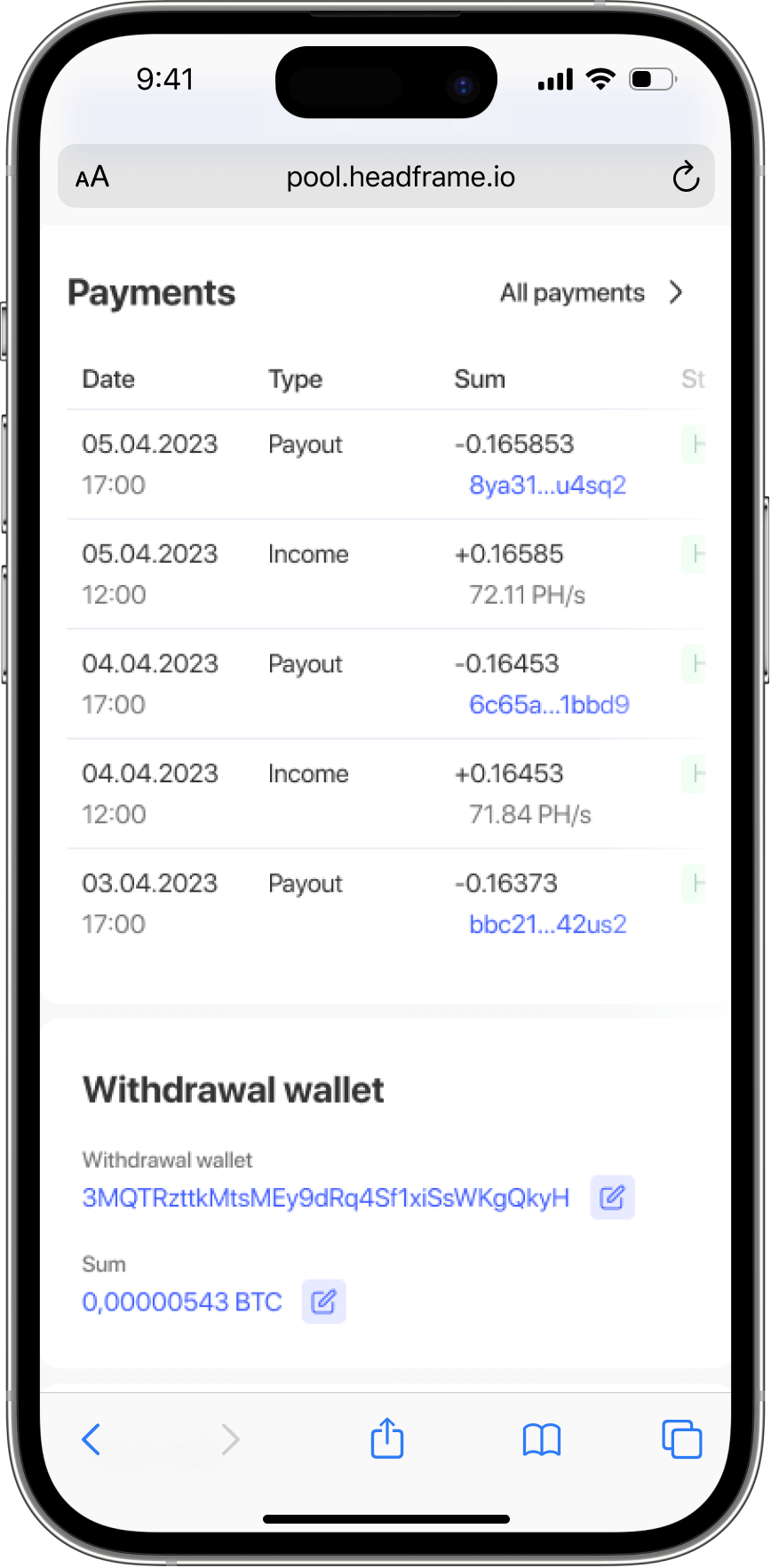
Payout design has a direct effect on miner experience and profitability expectations. Several reward systems are widely used:
Pay Per Share (PPS)
With PPS, miners receive a fixed payment for each valid share they submit. This creates predictable income for participants, while the pool operator carries more variance risk.
Proportional (PROP)
In a proportional model, rewards are distributed according to the number of shares contributed during a mining round. Payouts depend more directly on whether the pool finds blocks.
Pay Per Last N Shares (PPLNS)
PPLNS rewards miners based on their contribution over a rolling window of recent shares. This structure can discourage short-term switching between pools and favor longer-term participation.
Score-based systems
Score-based models assign different weights to shares, often giving more value to newer contributions. These systems are designed to reward consistency and reduce opportunistic behavior.
Security measures that matter
Mining pools are attractive targets for attackers because they handle infrastructure, user accounts, and reward distribution. Strong security practices are therefore essential. Important measures often include:
- two-factor authentication for account protection,
- encrypted connections between miners and servers,
- DDoS mitigation to preserve uptime,
- regular security reviews and audits,
- cold storage for part of the pool’s funds.
These controls help protect both operational continuity and the trust of participants.
What improves pool efficiency
Efficient mining pools do more than assign work and distribute payouts. They also invest in infrastructure and operational processes that improve performance over time. Common best practices include:
- optimizing server capacity and network routing,
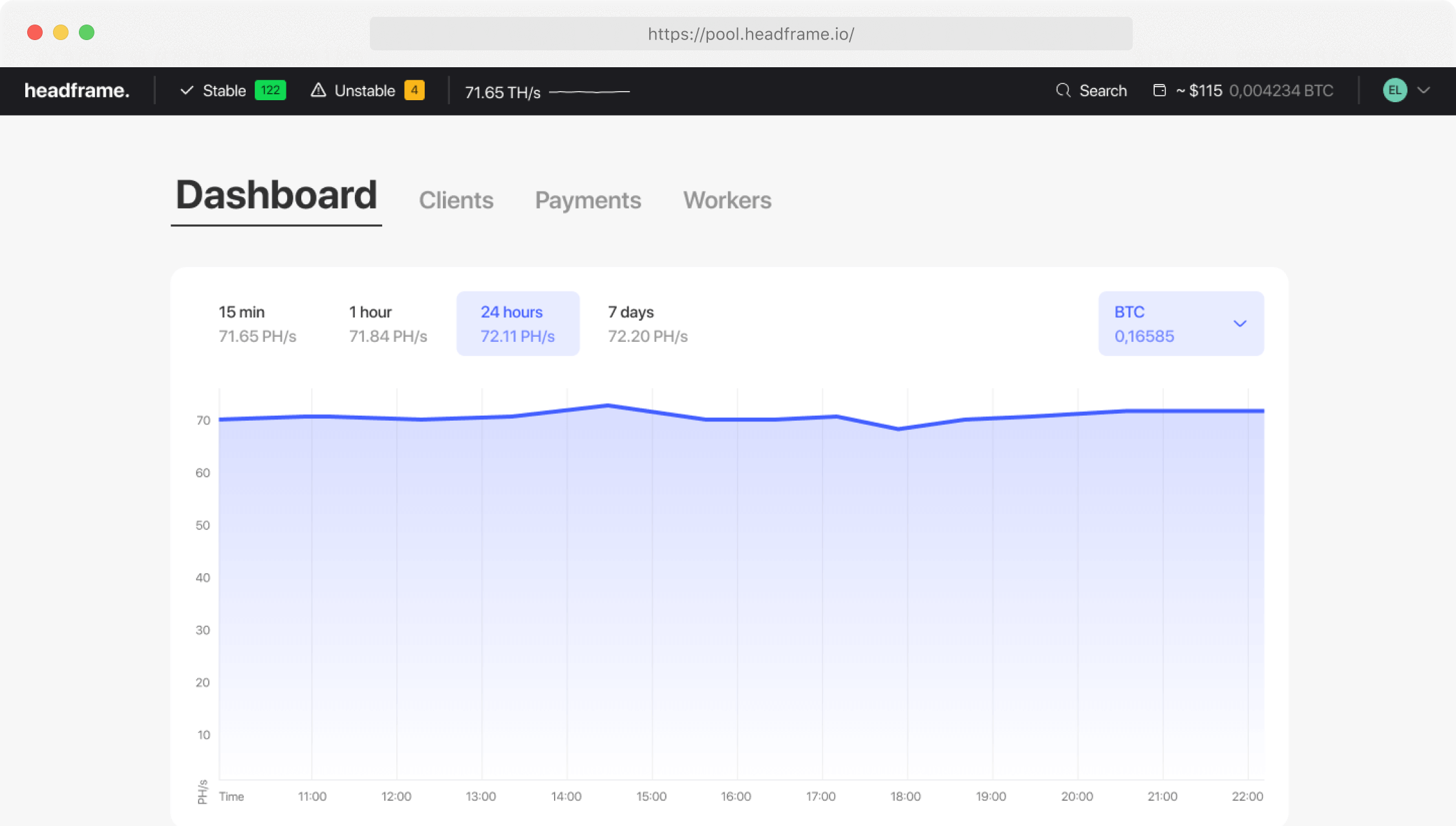
- monitoring uptime, latency, and hash rate in real time,
- maintaining transparent communication with miners,
- using fair and traceable reward accounting,
- adapting quickly to network difficulty and market changes.
These practices help pools remain competitive while giving miners more confidence in long-term participation.
Conclusion
Mining pool operations rely on a combination of technical coordination, fair reward design, and dependable security. Structure, work allocation, payout systems, and infrastructure all influence how effective a pool can be.
For miners and operators alike, understanding these mechanisms makes it easier to evaluate performance, manage risk, and choose an approach that supports stable and efficient mining activity.