Mining Farm Power Consumption
Power consumption is one of the most important variables in mining economics. Whether you run one machine or a larger farm, electricity cost determines whether your setup remains profitable or becomes too expensive to maintain. For this reason, miners need a clear way to calculate power usage and identify where efficiency gains are possible.
This guide breaks down the main factors behind mining farm consumption and shows how to estimate ongoing energy costs more accurately.
What affects mining farm power consumption
Mining power draw depends on more than hardware model alone. The algorithm being mined, chip design, power supply quality, cooling conditions, and firmware settings all influence real consumption. Even identical units can draw different amounts of power if operating conditions are different.
That is why electricity planning should always include both hardware specifications and the surrounding environment.
ASIC miners and electricity use
ASIC miners are designed for maximum efficiency on specific algorithms, which is why they dominate Bitcoin mining. Modern units often consume several kilowatts continuously, making them powerful but also energy-intensive. In practice, monthly consumption can be substantial even for a single device running without interruption.
For this reason, ASIC profitability depends heavily on power pricing and infrastructure quality.
GPU rigs and electricity use
GPU mining farms generally consume less power per rig than industrial ASIC setups, but the total still adds up quickly when multiple cards are running. Their advantage is flexibility: power limits can often be adjusted, allowing operators to trade some hashrate for lower consumption and better efficiency.
This makes GPUs useful in situations where adaptability matters more than absolute output.
How to calculate electricity cost
A simple calculation can be used to estimate monthly energy expense:
Monthly cost = device power in kW x 24 hours x 30 days x electricity rate per kWh
It is also wise to add a buffer for cooling, conversion losses, and supporting equipment. In real operations, the total bill is often higher than the machine’s nominal draw alone suggests.
Ways to reduce consumption
Operators commonly improve efficiency through several practical steps:
- undervolting or lower-power operating modes,
- better airflow and cooling design,
- higher-efficiency power supplies,
- immersion or advanced cooling systems where appropriate,
- access to lower-cost or time-based electricity tariffs.
The goal is not only to reduce raw power draw, but to improve output per watt used.
Why efficiency matters for ROI
Mining profitability is largely the difference between mining revenue and operating expense, and electricity is usually the largest recurring cost. A setup with weaker efficiency can struggle to stay profitable even when the hardware itself looks strong on paper.
That is why serious mining planning often starts with power analysis before revenue estimates.
Conclusion
Mining farm power consumption is a core factor in whether mining works as a sustainable business. Hardware type, cooling, operating mode, and electricity rate all shape the final cost. A proper estimate helps miners understand real profitability instead of relying only on hashrate numbers.
The more efficiently a farm converts electricity into useful mining output, the stronger its long-term position usually becomes.
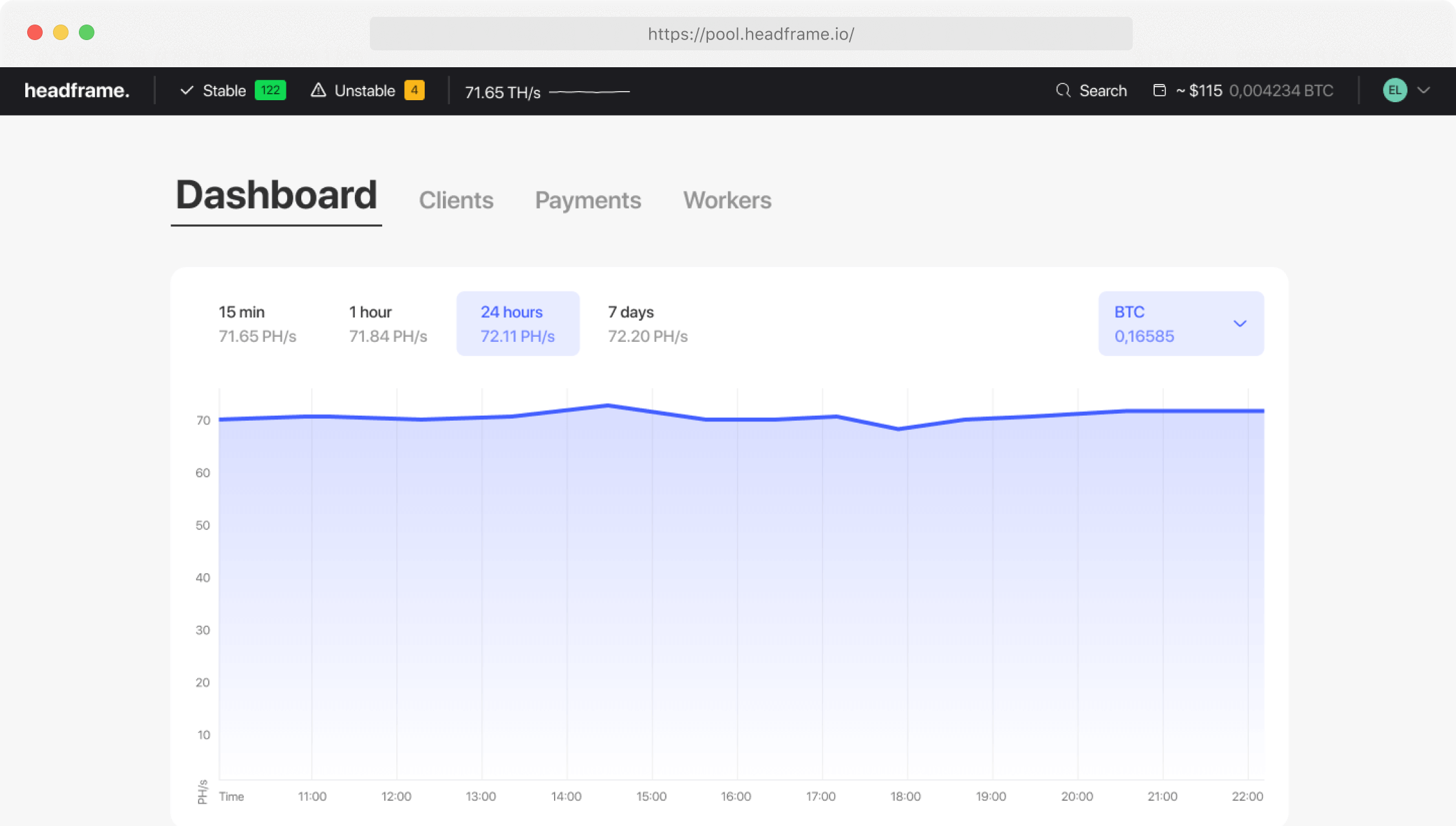
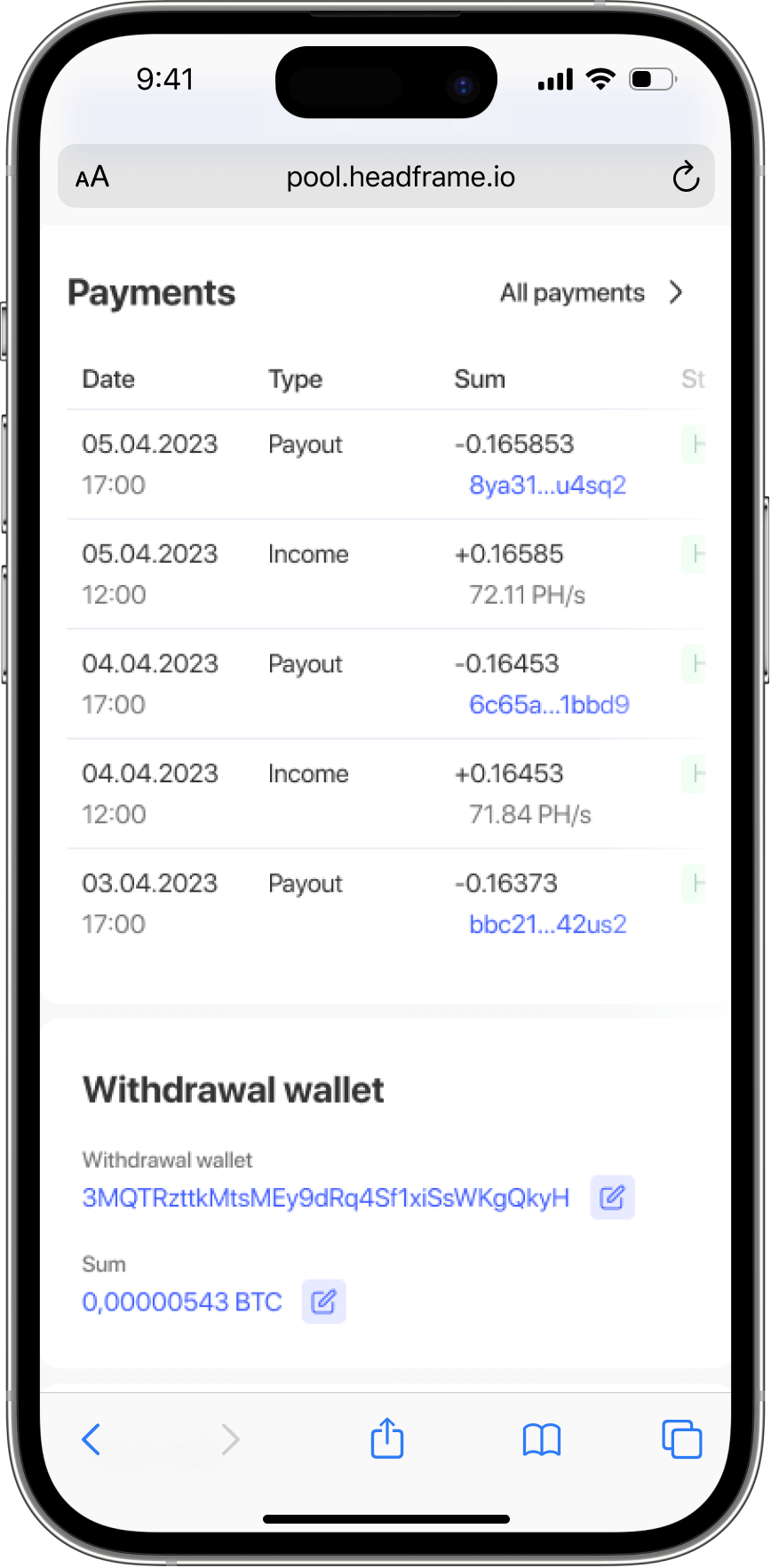
Once your power consumption is optimized and your hardware is ready, the final step is choosing a reliable partner. Headframe offers an FPPS reward system with a low fee of 0.9%, daily free payouts, and stable stratum servers. You can also monitor hashrate and device health through the iOS app and the Android app.