How to Prevent Fraud in Mining Pools
Mining pools make participation in cryptocurrency mining more accessible, but they also create an environment where trust matters deeply. Because pools manage reward distribution, user access, and operational data, fraud prevention becomes a central part of responsible pool management.
Reducing fraud risk requires a combination of transparent processes, secure systems, and active communication with participants.
Why fraud risk exists in mining pools
Fraud in mining pools can take different forms. It may involve unfair reward distribution, misuse of participant contributions, deceptive behavior by operators, or attempts to manipulate systems for financial gain. Because many participants rely on the pool’s internal calculations, transparency is critical.
The less visible the process is, the easier it becomes for abuse or suspicion to grow.
Transparency is the first defense
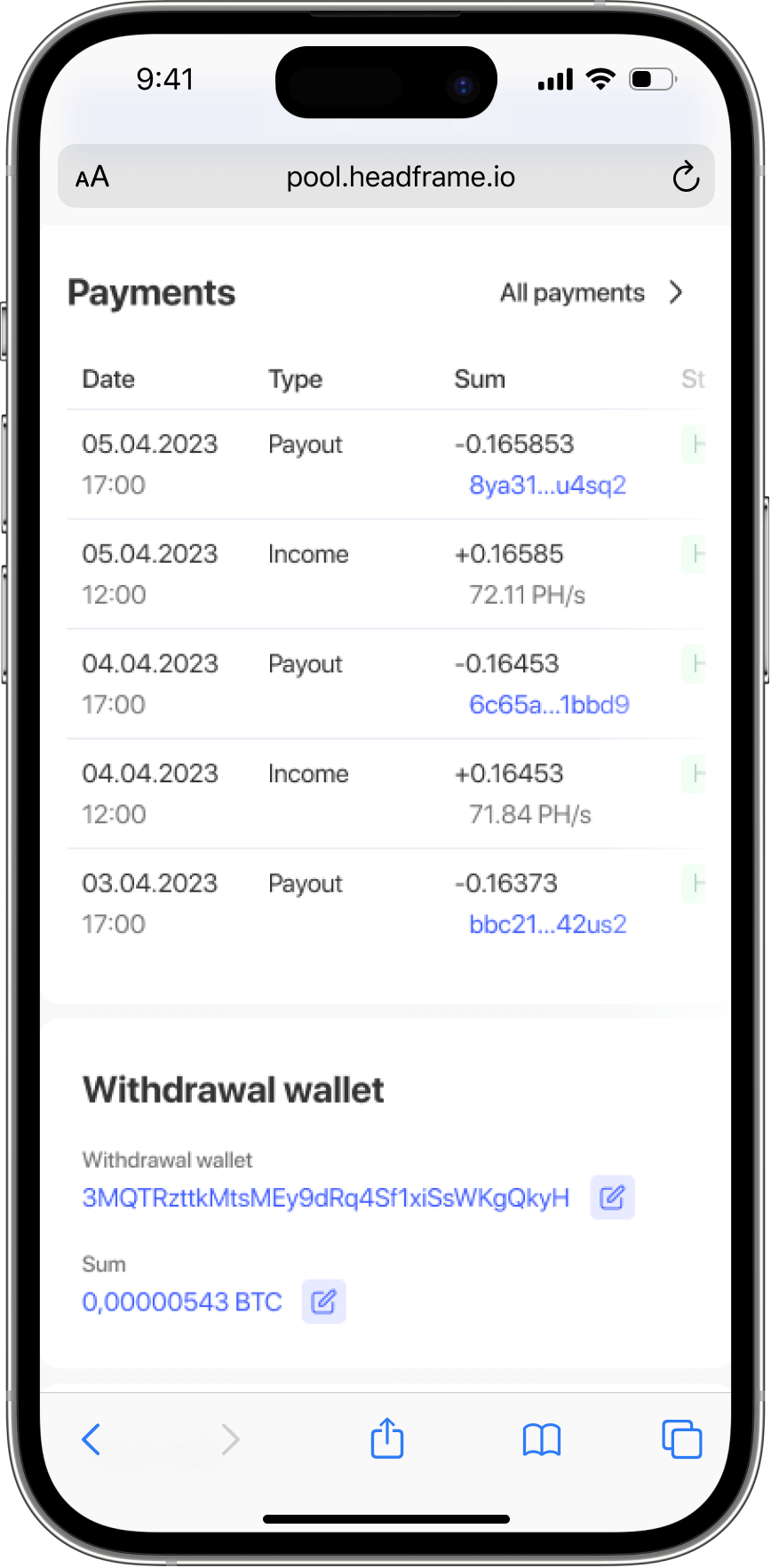
One of the strongest ways to reduce fraud risk is to make pool operations easier to verify. Open reporting on payouts, transactions, fees, and operational rules helps participants understand how the pool works and whether reward distribution appears fair.
The more visible the system is, the harder it becomes to hide irregular behavior.
Secure software and regular audits
Fraud prevention also depends on the quality of the software behind the pool. Weak systems are easier to manipulate or exploit. That is why regular audits, prompt security updates, and reliable development practices are essential.
Well-maintained software reduces both the risk of outside attacks and the chance of internal abuse going unnoticed.
Protect access with stronger authentication
Unauthorized access can create direct fraud risk, especially when attackers gain control over accounts or sensitive functions. Multi-factor authentication and restricted administrative privileges help reduce this exposure.
High-risk actions such as fund management are generally safer when they require multiple approvals or stronger access controls.
Use fair and documented reward rules
Reward distribution should rely on clear, consistent, and transparent algorithms. If miners do not understand how rewards are calculated, distrust grows quickly. Pools that document their rules and apply them consistently are better positioned to build confidence among participants.
Regular review of payout logic also helps confirm that the system remains fair in practice.
Educate participants about risks
Fraud prevention is not only the responsibility of pool operators. Participants also need to recognize suspicious behavior, phishing attempts, and unrealistic promises. Educational content, updates, and security guidance can help users respond more effectively when risks appear.
An informed participant base adds another layer of protection to the pool ecosystem.
Technology can improve detection
Modern monitoring tools can help pools identify unusual activity patterns faster. Automated systems, analytics, and anomaly detection can all support earlier identification of suspicious behavior, whether it comes from user actions, internal inconsistencies, or system abuse.
These tools are especially useful in larger pools where manual oversight alone may not be enough.
Culture and governance matter too
Trust is also shaped by the culture of the pool. A pool that encourages openness, documents decisions clearly, and responds seriously to concerns is more likely to retain credibility. Good governance helps reduce the gap between technical security and participant confidence.
Fraud prevention works best when it is part of the pool’s operating culture rather than a reactive control.
Conclusion
Preventing fraud in mining pools requires more than a single safeguard. It depends on transparency, secure software, fair reward systems, stronger authentication, user education, and continuous monitoring.
Pools that combine these measures create a safer environment for participants and build the kind of trust needed for long-term stability and growth.