Which Cryptocurrency Is Profitable to Mine in 2026?
If you are trying to decide which cryptocurrency is profitable to mine right now, you need to look beyond the coin price alone. Real mining profitability depends on electricity costs, network hash rate, hardware efficiency, and the mining pool you connect to. In this article, we explain what is most profitable to mine in 2026, what hardware you need, and how to estimate whether mining is worth your investment.
Is Mining Still Profitable Today?
The short answer is yes, but the rules have changed. The era of easy profits, when someone could place a mining rig on a balcony and recover the investment in a few months, is over. In 2026, crypto mining is a structured and competitive business where margins depend on careful calculation.
For mining to be profitable today, success usually depends on three core factors:
- Electricity cost: This is the largest operating expense for most miners. Mining tends to remain highly profitable when electricity costs stay low enough to preserve margin.
- Hardware efficiency: Older miners often run “for the outlet.” The fewer joules your ASIC uses per terahash (J/TH), the more stable your profit remains when market conditions change.
- Mining pool conditions: Every percentage point matters. A fair payout system such as FPPS and a low pool fee can significantly improve daily returns and speed up ROI.
Even with record-high network difficulty, mining remains attractive because the value of major digital assets has increased and transaction fee income continues to matter more.
Bitcoin (BTC): The Industry Standard
When serious investors ask which cryptocurrency is safest and most reliable to mine for the long term, the answer is usually Bitcoin. After the 2024 halving, the network adapted, and in 2026 BTC mining is still the benchmark for industrial-scale operations. Unlike many volatile altcoins, Bitcoin is backed by the strongest infrastructure, the deepest liquidity, and broad institutional interest.
If you are asking what is most profitable to mine at scale, BTC remains the dominant choice. Yes, network difficulty is at record levels, but the value of Bitcoin and transaction fee income have also increased. That combination helps create a more predictable cash flow, which is essential when operating expensive ASIC hardware.
Many newcomers worry that Bitcoin mining is no longer profitable because of high difficulty. In practice, with efficient modern ASIC miners and low enough electricity rates, BTC is still one of the strongest long-term options in mining.
Altcoins: Are Alternatives Worth Mining?
Although Bitcoin dominates, many miners still look for other coins to mine in the hope of faster ROI. There are still alternative cryptocurrencies on algorithms outside SHA-256. In 2026, the most common alternatives include:
- Litecoin (LTC) and Dogecoin (DOGE): These can be mined together through merged mining on the Scrypt algorithm. Hardware like the Antminer L7 or newer L9 models can still produce decent returns. This is a stable alternative for miners who want diversification.
- Kaspa (KAS): KAS attracted a great deal of attention in previous years. In 2026, the network is also dominated by ASIC miners. Some investors still consider it profitable, but altcoin price risk remains much higher than Bitcoin risk.
- Bitcoin Cash (BCH): As a fork of Bitcoin using SHA-256, BCH can occasionally become momentarily more profitable if automatic profit-switching tools redirect hash rate there. However, for long-term holding, most miners still prefer BTC.
When choosing which cryptocurrency is worth mining, it is important to remember that altcoins may show short bursts of higher profitability, but over a two- to three-year horizon they often underperform Bitcoin because of deeper drawdowns in weak markets.
What Is Not Worth Mining?
There is still a lot of outdated advice online. Many people continue to search for the best coin to mine with GPUs. In 2026, the answer is blunt: industrial-scale, consistently profitable GPU mining is effectively dead. After Ethereum moved to Proof of Stake, GPUs became far less attractive for serious mining businesses and are now used more often for rendering, AI workloads, or speculative experiments with small-cap tokens.
You should also be cautious with advice about which coin is the easiest to mine. “Easy” usually means weak liquidity, low demand, and poor long-term economics. Mining millions of low-value tokens does not help if those tokens cannot be sold at scale.
Avoid wasting power on:
- Dead or weak Ethereum forks with little real economic activity.
- Low-cap speculative tokens with poor liquidity.
- Projects promoting “innovative mining” with no sustainable economic model.
If you want to know what is profitable to mine, a good rule is to eliminate assets without strong market capitalization, real trading volume, and durable history.
What Hardware Do You Need?
Since the most reliable answer to what crypto is best to mine usually points back to Bitcoin, the required hardware is clear: ASIC miners built for the SHA-256 algorithm. In 2026, the market is dominated by models with the best energy efficiency. The J/TH metric remains crucial. The lower it is, the better.
Leading models from Bitmain, such as the Antminer S21 and S21 Pro series, and machines from MicroBT, such as the WhatsMiner M60S and M63S lines, are still among the strongest choices. These devices can remain profitable even when prices correct or electricity gets more expensive.
| Hardware Class | Algorithm | Approximate Hash Rate | Energy Efficiency | Best Use Case |
|---|---|---|---|---|
| Flagship air-cooled ASICs | SHA-256 (BTC) | 200 – 250 TH/s | 15 – 17.5 J/TH | Data centers, commercial mining with mid-range power costs |
| Hydro / immersion ASICs | SHA-256 (BTC) | 300 – 400+ TH/s | 12 – 15 J/TH | Large industrial mining sites with advanced cooling systems |
| Previous-generation ASICs (S19 XP, M50S) | SHA-256 (BTC) | 120 – 150 TH/s | 21 – 25 J/TH | Only viable with very cheap electricity |
If you are thinking about what is best to mine now, remember that buying cheap but inefficient ASIC miners can easily leave you mining only to pay for electricity.
How to Reduce Risk and Protect Your Investment
Mining profitability is not just about hardware and coin price. Basic operational discipline matters:
- Legal compliance: Large-scale mining operations should always follow local legal and tax requirements. Ignoring regulation can create serious financial risk.
- Infrastructure: ASIC miners generate a lot of heat. Poor electrical wiring and weak ventilation are serious threats. Professional hosting or well-prepared facilities are often the safest route.
- Pool selection: Solo mining makes little sense for almost everyone. Miners usually contribute hash rate to a pool, which combines power from many users and distributes rewards proportionally. A bad pool can reduce your effective earnings through hidden issues, poor uptime, or unfair conditions.
Which Mining Pool Is Best for Profitable Mining?
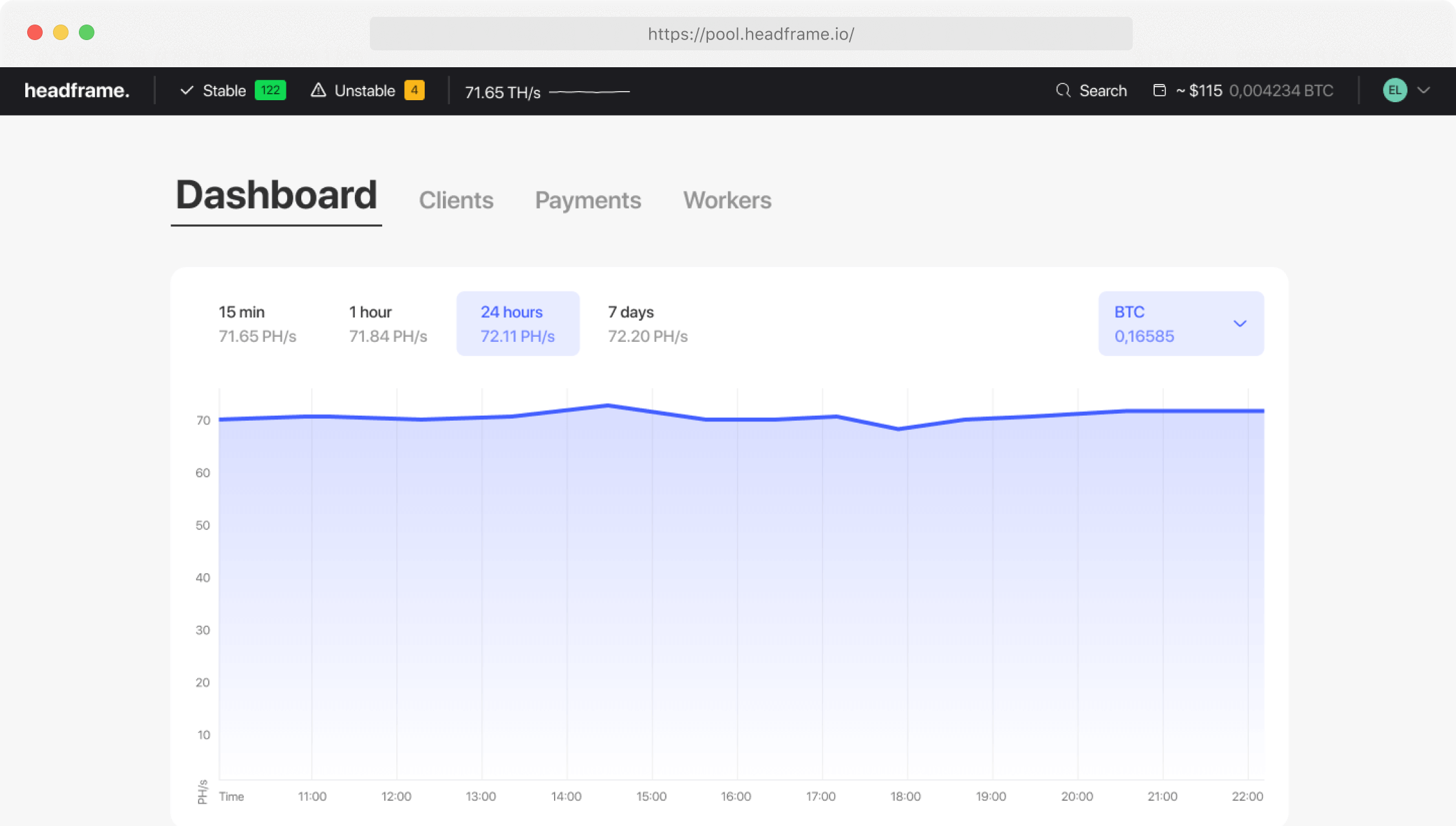
Once you decide what is profitable to mine and which hardware you need, the final step is choosing the right mining pool. This directly affects how many satoshis reach your wallet every day. If your choice is Bitcoin mining with ASIC hardware, Headframe is a strong option:
- Low pool fee: Headframe charges only 0.9%, while many large pools take between 2% and 4%.
- FPPS payouts: With FPPS, every valid share is paid, and miners also benefit from transaction fee distribution.
- Stable stratum infrastructure: Reliable connection quality helps miners avoid hash rate drops and connection issues.
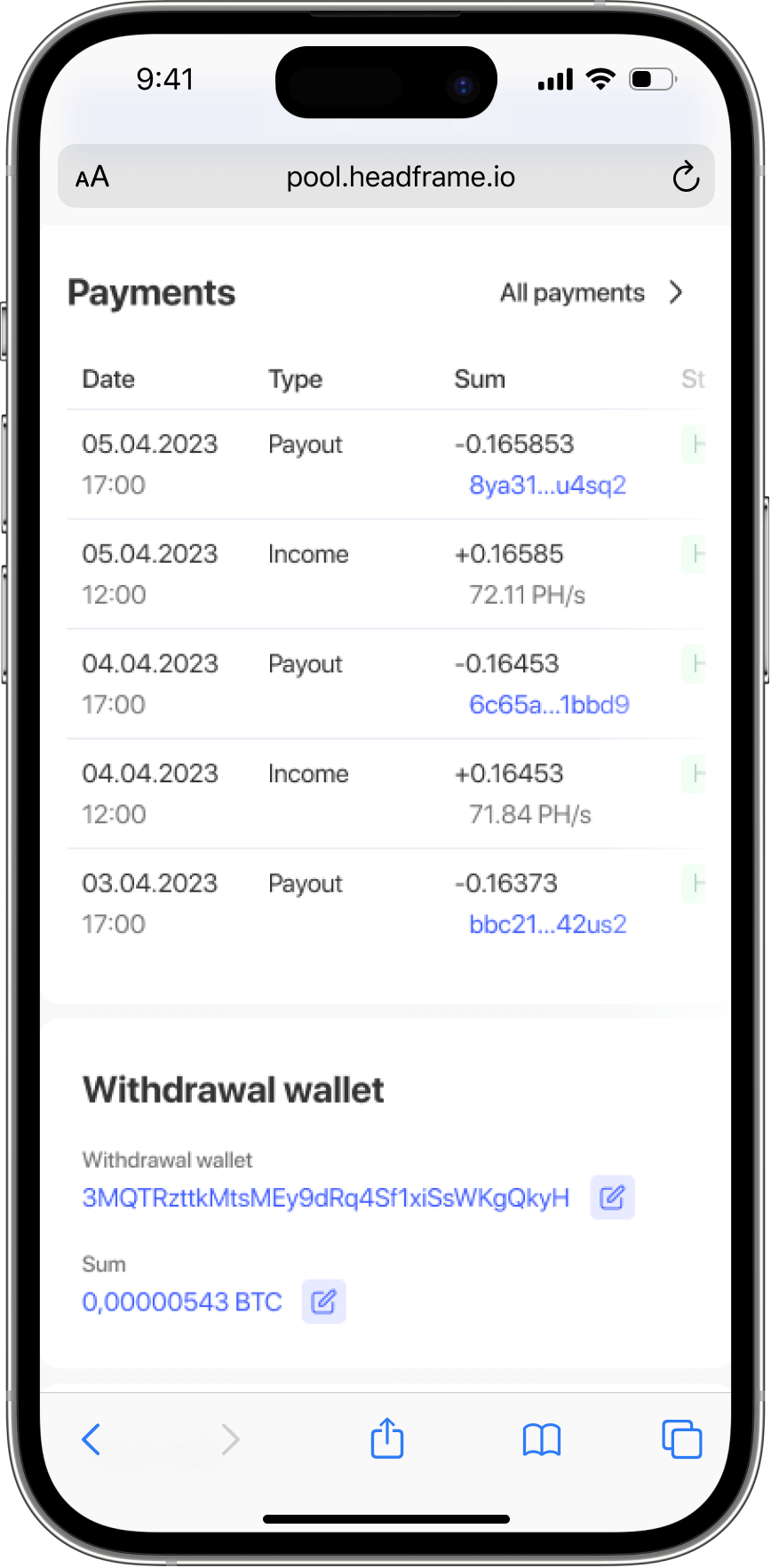
- Daily free payouts: Frequent payouts improve cash flow and make it easier to manage profits.
Good mining operations also need strong monitoring tools. That is why Headframe provides a mobile app that lets users monitor hash rate, worker temperature, and earnings in real time.
You can download the official Headframe monitoring app here:
- For iOS users: Headframe Pool on the App Store
- For Android users: Headframe Pool on Google Play