How Long Does It Take to Mine 1 Bitcoin? Calculation and Limits
There is no fixed time in which one miner earns 1 BTC. Bitcoin targets an average block interval of about ten minutes, not the creation of exactly one bitcoin every ten minutes. Your expected earnings depend on effective hashrate, network conditions, reward distribution, fees and uptime.
The practical calculation for a pool miner
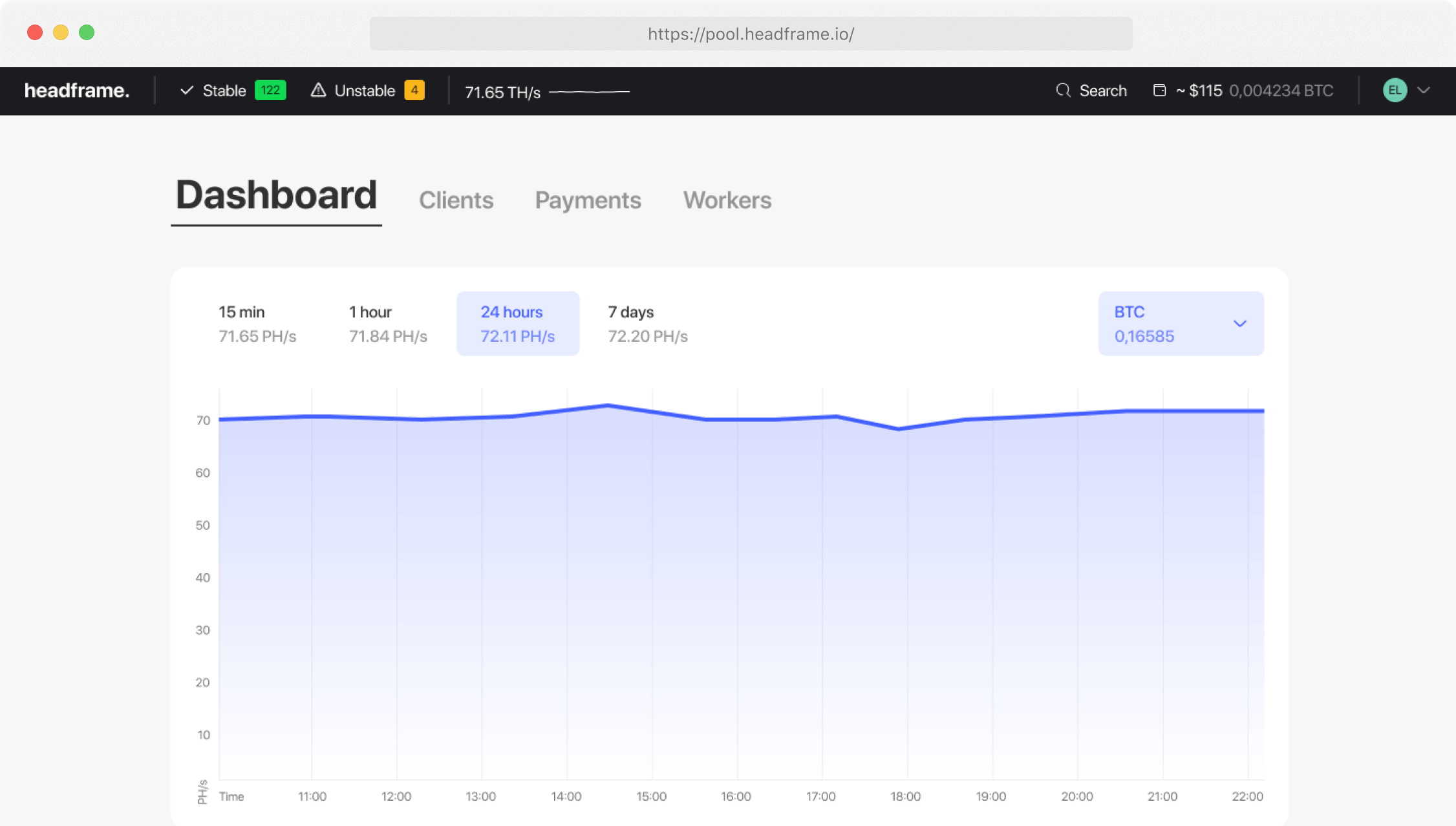
Start with a realistic daily BTC credit for your equipment and pool, with its date and assumptions. If the figure already includes the pool fee and observed downtime, do not subtract those items a second time.
Estimated days to accumulate 1 BTC = 1 ÷ daily BTC credited. This is a constant-rate illustration, not a prediction. Difficulty, transaction-fee revenue, pool terms and equipment availability can change before the target is reached.
For example, suppose a miner is credited 0.0001 BTC per day after the pool fee. At an unchanged rate, 1 ÷ 0.0001 = 10,000 days. This chosen number is for arithmetic only; it is not a current quotation for any ASIC.
How many ASICs would be needed?
Using the same illustrative daily credit, the number of identical units needed for a target is:
Units = target BTC ÷ (daily BTC per unit × target days), rounded up.
For 1 BTC in 365 days at 0.0001 BTC per unit per day: 1 ÷ (0.0001 × 365) ≈ 27.40, or 28 units. This assumes the same per-unit rate and adequate electrical, cooling and network capacity. Buying more units also increases costs; it does not guarantee the target.
Accumulating BTC is not the same as making a profit
Pool credits measure coins earned before some operating expenses. To assess profit, convert revenue and expenses into the same currency and period, then account for electricity, hosting or cooling, repairs and equipment cost. A machine can accumulate BTC while losing money overall.
Use the Bitcoin mining calculator to test assumptions, rather than treating a multi-year constant-rate estimate as a forecast. Check whether each displayed figure is revenue or profit and whether fees are already included.
Why solo mining has no guaranteed completion date
A solo miner receives a block reward only after finding a valid block. An expected waiting time is a statistical average, not a schedule: the miner may find a block much earlier, much later or not within the planned operating period. Pool accounting distributes earnings differently; a pool payment threshold can also delay the actual withdrawal.
Can a graphics card mine 1 BTC in a few days?
A GPU hashrate advertised for another algorithm cannot be used as a Bitcoin SHA-256 hashrate. Commercial Bitcoin mining uses specialized ASICs. Mining another asset and being paid or exchanging it into BTC is a different operation, with different costs and risks.
For the protocol and pooled-mining background, see the Bitcoin Developer Guide. Recalculate using current inputs instead of reusing an old block reward or network hashrate.