How Much Can You Make From Mining in 2026?
- What Mining Profitability Depends on in 2026
- How Much a Mining Farm Can Make Per Month: Realistic Estimates
- How Much One ASIC Miner Can Make Per Month
- How Much Can You Make Mining With GPUs?
- Main Cost Categories in a Mining Farm
- Mining ROI and Net Profit Calculation
- Risks That Directly Affect Mining Income
- Final Verdict: Is Mining Still Worth It Today?
How much you can make from mining in 2026 depends on far more than just the price of Bitcoin. Mining has fully evolved from a hobby into a capital-intensive business where profit is shaped by electricity costs, network difficulty, hardware efficiency, and pool conditions. If you want to understand how much mining can earn today, you need to look at the full economics behind the operation.
What Mining Profitability Depends on in 2026
In 2026, mining profitability is no longer random. It is the result of a changing equation in which the most important variables can shift every day. To estimate how much mining can generate, you need to account for both market conditions and operational costs.
- Network difficulty: The more hash rate joins the Bitcoin network, the harder it becomes to mine a block. In 2026, difficulty is near historic highs, which means only modern ASIC hardware can stay competitive.
- Cryptocurrency price: BTC volatility directly affects your revenue in fiat terms. Even if coin production stays stable, a sharp price drop can temporarily wipe out your margin.
- Electricity cost: This remains the key factor for mining profitability. The difference between a low industrial tariff and a standard residential rate often determines whether mining is profitable at all.
- Hardware efficiency: In 2026, J/TH is often more important than raw hash rate. Machines that consume too much power per terahash are the first to become unprofitable when market conditions weaken.
- Halving and block rewards: The after-effects of previous halvings still pressure mining income, forcing operators to optimize expenses and choose the most efficient mining pools.
How Much a Mining Farm Can Make Per Month: Realistic Estimates
To understand the real picture, let’s look at a mid-sized mining farm made up of 10 modern ASIC miners. In 2026, this is often considered a reasonable entry point for a semi-professional mining operation.
| Metric | Approximate Value |
|---|---|
| Total hash rate (10 units of S21 Ultra) | ~3500 TH/s |
| Power consumption | ~33 kW/h |
| Gross monthly revenue (with BTC above $80k) | ~$6,500 – $7,200 |
| Electricity costs (at 4.5 RUB per kWh equivalent) | ~$1,100 – $1,300 |
| Net profit | $5,200 – $5,900 |
It is important to understand that monthly mining revenue also depends on how rewards are credited by the pool. In 2026, FPPS (Full Pay Per Share) remains the industry standard because it includes not only block rewards but also transaction fees. Depending on network congestion, that can improve returns by 5% to 15%.
How Much One ASIC Miner Can Make Per Month
Looking at a single machine makes it easier to understand the real entry threshold. In 2026, many miners focus on current-generation models such as the Antminer S21 series and comparable WhatsMiner units. A modern ASIC running at roughly 330 TH/s can still generate meaningful monthly revenue under the right conditions.
One efficient ASIC miner can produce around 0.005 to 0.007 BTC per month. In fiat terms, under favorable market conditions, that may equal roughly $500 to $650 in gross revenue. After electricity costs are deducted, net income may remain at a level that is still attractive for operators with efficient infrastructure.
However, hardware wear must be taken seriously. Mining runs 24/7, and cooling quality directly affects profitability. If an ASIC overheats, chip degradation accelerates, hash rate drops, and the risk of failure rises sharply. One repair bill can erase a large part of monthly profit.
How Much Can You Make Mining With GPUs?
The question “how much can you make mining with GPUs” means something very different in 2026 than it did during the Ethereum boom. Today, GPU mining is more niche and is focused on alternative coins such as KASPA, IronFish, Radiant, or on decentralized compute networks tied to AI workloads.
- Revenue from one high-end GPU (such as an RTX 5090): Usually around $1.5 to $3 per day before electricity.
- An 8-GPU rig: Can generate roughly $400 to $600 per month.
The main weakness of GPU mining in 2026 is low liquidity and high volatility in the coins being mined. Unlike Bitcoin, many altcoins can lose most of their value in a very short time. That is why most serious mining operators still prefer ASIC equipment for BTC, while GPUs are more often used for experimentation or specialized compute rental.
Main Cost Categories in a Mining Farm
When people calculate mining profit, they often focus only on electricity and forget about the hidden costs that consume a large share of the budget.
- Facility rent and preparation: A mining farm needs proper ventilation, dust filtration, and stable internet. At industrial scale, these are major capital expenses.
- Maintenance and cleaning: ASIC miners must be cleaned regularly. Thermal paste or thermal pads may also need replacement, otherwise overheating becomes unavoidable.
- Logistics and import costs: If you buy new equipment from China, shipping, customs, and legal import costs can significantly increase the final price.
- Pool and transaction fees: Pool fees may seem small, but choosing the right mining pool still matters because withdrawal limits and fee structures can affect cash flow.
Mining ROI and Net Profit Calculation
Mining farm ROI is the most important metric for any investor. In 2026, a typical payback period often ranges from 14 to 22 months, depending on electricity, hardware price, and BTC market conditions.
A simplified formula looks like this:
Net profit = (Mined crypto × Market price) – (Power consumption × Electricity tariff) – Maintenance costs – Taxes.
Taxes also need to be included in any serious business plan. If equipment is purchased during a BTC price peak, ROI can stretch much longer. One of the most effective mining strategies in 2026 is entering the market during periods of stagnation, when ASIC prices are lower and competition for new hardware is less aggressive.
Risks That Directly Affect Mining Income
Mining is not passive income. It is a business with serious operational and market risks. In 2026, the most important risks include:
- Regulation: Mining is more regulated than before. Compliance, business registration, and energy use rules can directly affect whether an operation remains viable.
- Network blocks and provider issues: Some internet providers still interfere with mining traffic or create instability for stratum connections, which can hurt effective hash rate.
- Technological progress: A new generation of ASIC miners with dramatically better efficiency can make older machines unprofitable very quickly.
- Cybersecurity: Hash rate theft, malicious firmware, and compromised pool accounts are real risks. Strong passwords, 2FA, and trusted firmware are now essential.
Final Verdict: Is Mining Still Worth It Today?
Yes, but only with a professional approach. The time when you could place an ASIC miner on a balcony and forget about it is over. Today, mining income depends on market analysis, cheap electricity, reliable infrastructure, and disciplined operations.
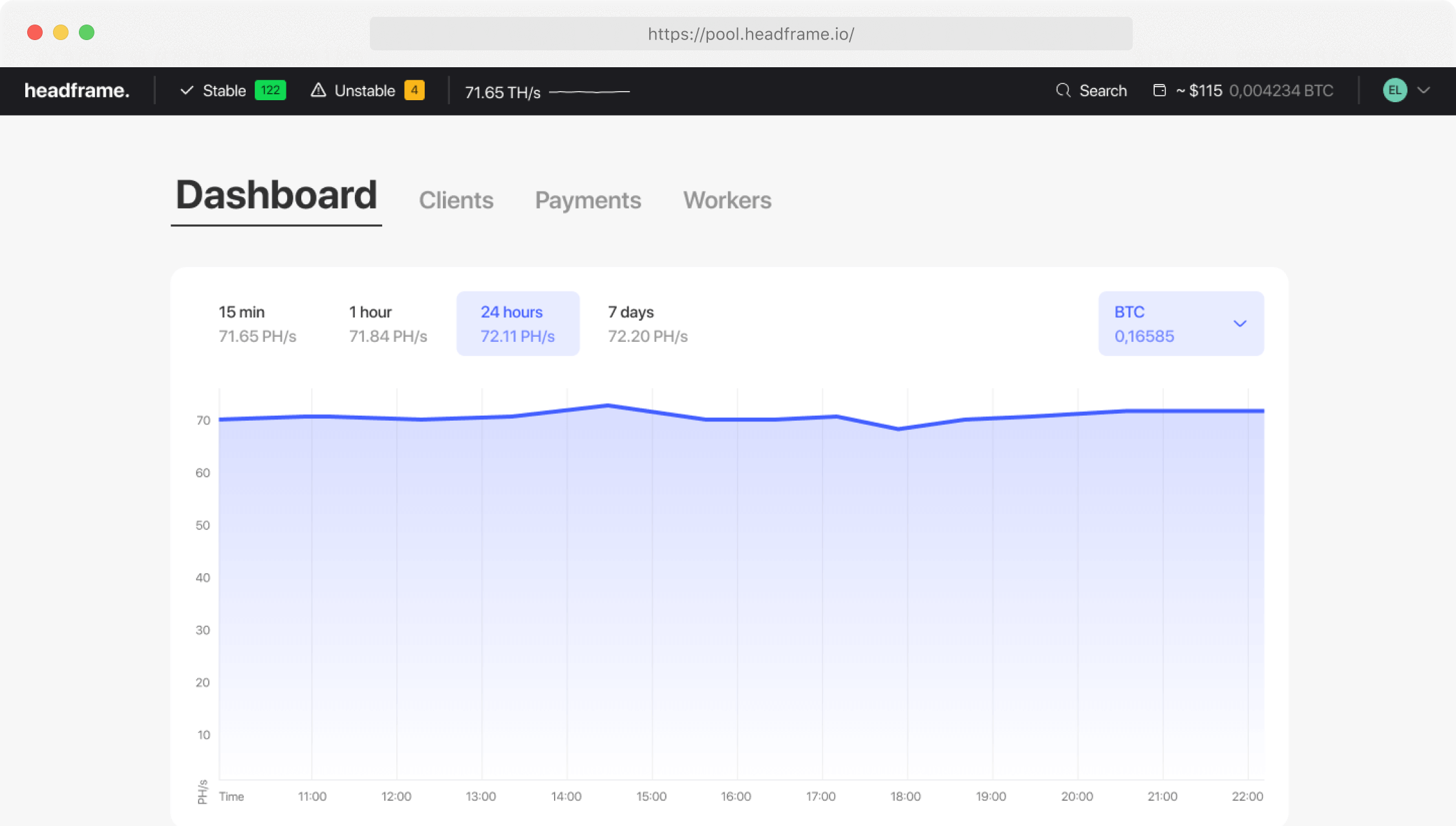
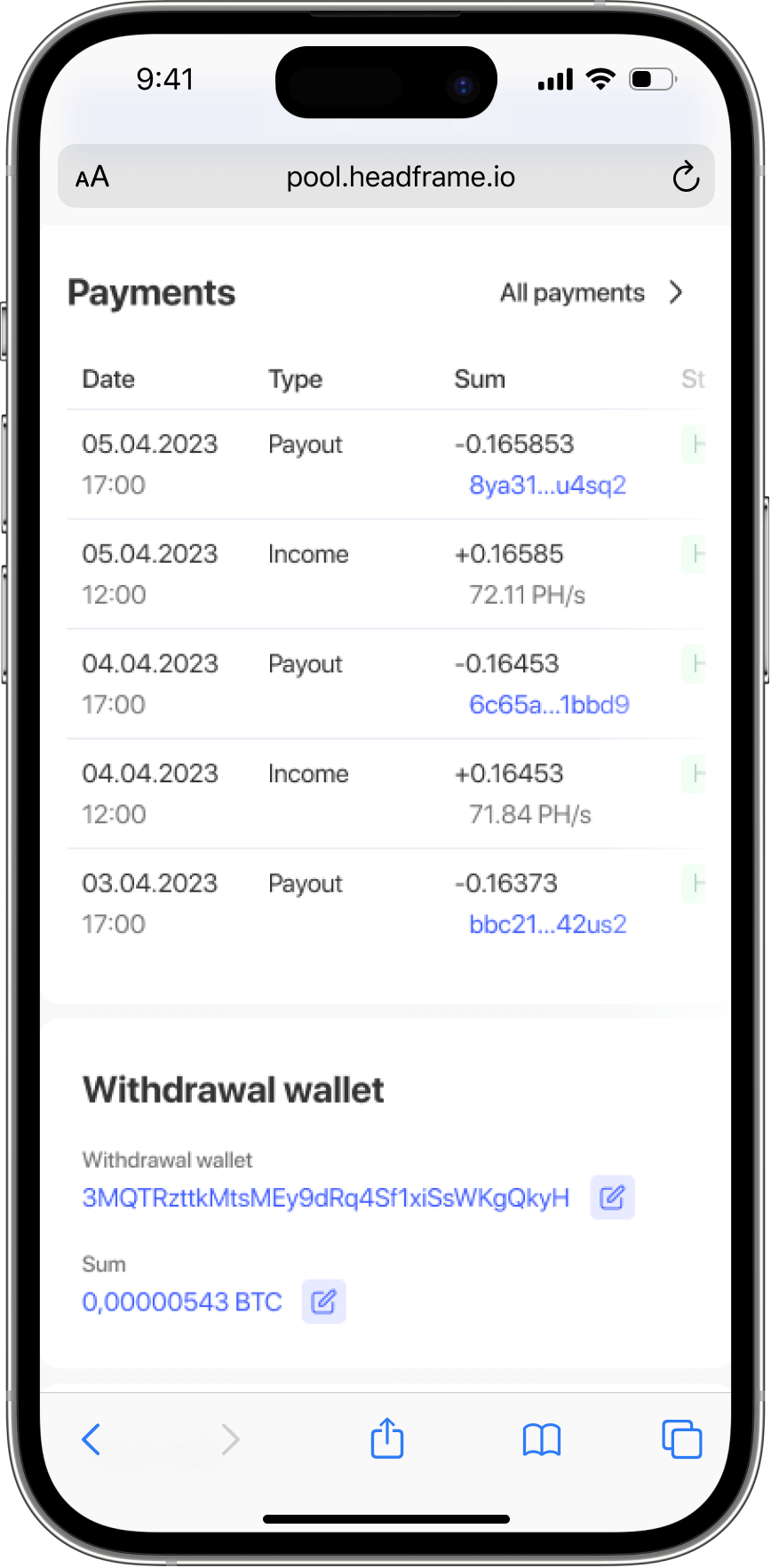
To maximize returns, it is critical to choose the right mining pool in 2026. For example, the Headframe mining pool offers strong conditions for Bitcoin mining with ASIC hardware. Thanks to the FPPS payout system, miners receive full value from network fees, while the pool fee of 0.9% remains one of the lowest on the market.
Reliable stratum servers, protection against provider-side instability, and daily free payouts help miners lock in profits faster. Real-time monitoring through mobile apps for iOS and Android adds another operational advantage. In 2026, these tools are no longer optional. They are essential for maintaining high mining profitability and protecting the long-term economics of a mining business.