Innosilicon T3 Pro: Used ASIC Evaluation Guide
- Identify the exact machine in the offer
- Demand evidence from a sustained test
- Inspect condition and repair history
- Calculate the delivered economic value
- Write the acceptance criteria before payment
- Plan transport and commissioning
- How to evaluate a used Innosilicon T3 Pro
- Verify the exact unit before pricing it
- Inspect the service risk
- Define an acceptance test
This guide is for evaluating a used Innosilicon T3 Pro before purchase. It focuses on identity, seller evidence, physical condition, acceptance testing and the full delivered cost. Day-to-day pool setup belongs in the separate T3 operations guide.
Identify the exact machine in the offer
Ask for clear photographs of the chassis labels, controller screen and power supply. Match the model and sub-version across the listing and interface. A product-family name is not sufficient because condition, firmware history and included equipment can change the value of two apparently similar units.
Request the serial numbers in advance and make them part of the invoice or acceptance record. This prevents a tested unit from being replaced with another machine before shipment.
Demand evidence from a sustained test
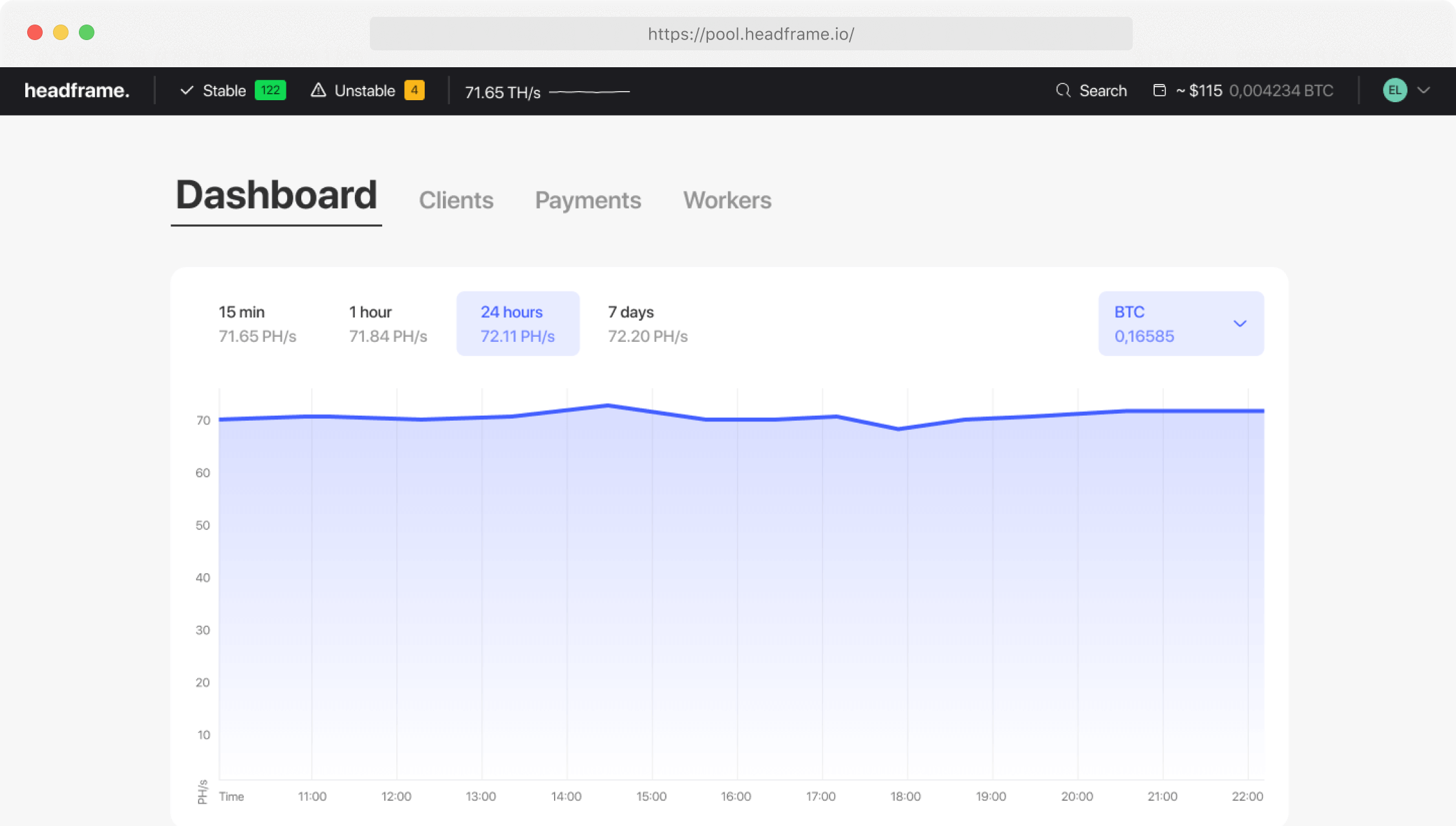
A seller screenshot should show the full dashboard, board status, temperatures, fan readings, errors and a visible timestamp. Ask for a kernel or system log covering the same interval. Very short tests can hide warm-up failures, unstable boards and power-supply behaviour.
Pool-side evidence should use a temporary worker that the buyer can identify. Compare the sustained pool average with the controller output, but allow for their different averaging windows. Reject cropped evidence that hides board-level status or test duration.
Inspect condition and repair history
Look for corrosion, damaged connectors, improvised wiring, heavy dust deposits and signs that the chassis has been opened repeatedly. Ask whether hashboards, fans, controller or PSU were repaired or replaced and who performed the work. A clean exterior does not prove stable electronics.
Check whether compatible parts and competent repair service are available at the destination. A cheap unit can become expensive when one board or PSU must travel internationally for service.
Calculate the delivered economic value
Use measured wall power and sustained hashrate from the acceptance test. Add purchase price, auction or marketplace charges, shipping, insurance, customs, local handling, cooling and installation. Then compare expected BTC revenue with the site’s actual electricity contract.
Stress-test a lower BTC price, higher difficulty and reduced uptime. The useful comparison is cost per unit of stable output after delivery, not the seller’s price per machine.
Write the acceptance criteria before payment
Define the minimum sustained hashrate, maximum wall power, permitted hardware errors, complete board detection and test duration. State which accessories and PSU are included, who carries transit risk and what happens if the delivered serial numbers or test results do not match.
Plan transport and commissioning
Use packaging that protects the boards and fans from impact and moisture. On arrival, inspect before applying power, photograph the condition and commission one unit at a time on a known circuit. Preserve the initial logs in case a transport claim is required.
After the hardware passes acceptance, estimate it with the Bitcoin mining calculator. For endpoint and payout criteria, consult the Bitcoin mining pool comparison.
How to evaluate a used Innosilicon T3 Pro
Treat this page as a pre-purchase and hardware-evaluation guide. Ask for a current dashboard screenshot, kernel log, hashboard status, PSU details and a sustained test under the seller’s stated power profile. Confirm that the model and sub-version on the controller match the listing.
Estimate value from measured efficiency, local electricity cost, cooling overhead and the availability of compatible parts. Cosmetic condition is secondary to stable boards, repeatable hashrate and clean error logs. Use a pool test only after the hardware baseline is documented.
Verify the exact unit before pricing it
A product-family name is not enough for a used-machine decision. Match the controller label, firmware screen and seller description, then ask for an uninterrupted test log. Price the unit from measured wall power and sustained pool-side hashrate rather than a brief dashboard peak.
Inspect the service risk
Confirm that every hashboard is detected, fans respond normally and the power supply is the unit actually included in the offer. Ask whether boards were repaired, whether the controller or PSU was replaced and whether compatible parts are available in the destination country. Shipping and customs handling can turn a marginal purchase into an uneconomic one.
Define an acceptance test
Write down the minimum sustained hashrate, maximum wall power, permitted hardware errors and test duration before payment or delivery. Use a temporary worker controlled by the buyer, and reject evidence that omits timestamps or hides board-level status. Only after the unit passes should its expected BTC revenue be compared with electricity and cooling costs.