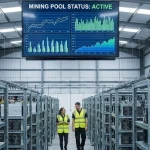
Bitcoin Mining Farms: How Modern Crypto Mining Farms Work
In 2026, digital asset mining has fully evolved from a garage hobby into a strategically important part of the digital economy. In the early days of crypto, coins could still be mined on an ordinary home computer. Today, a mining farm is a high-performance technological complex built around ASIC hardware, power infrastructure, cooling, networking, and real-time monitoring. If you are researching what a mining farm is, how a Bitcoin mining farm works, or how to launch a profitable project in Russia, this guide covers the essentials.
What Is a Mining Farm?
In simple terms, mining is the process that keeps a blockchain alive. Without miners, transactions on the Bitcoin network cannot be confirmed. You can think of it as a global digital accounting system that works 24/7: instead of accountants, it relies on specialized computing machines, and instead of paper ledgers, it processes blocks of data.
A mining farm is a group of devices connected into one system to solve complex cryptographic problems. The machine that finds the correct solution first helps validate a new block and receives a network reward in newly issued coins. In other words, a modern crypto mining farm is no longer a small home rig. It is a professional digital production facility that requires engineering, operations, and ongoing management.
How Does a Modern Mining Farm Work?
Modern mining equipment is built around the Proof-of-Work (PoW) model. A mining farm runs around the clock, consuming electricity and computing power to generate billions of hashes per second while attempting to produce a valid solution for the next block of transactions.
Competition on the Bitcoin network is now so intense that GPU mining for BTC has largely become a thing of the past. This market is dominated by ASIC miners, purpose-built machines designed specifically for hashing. They cannot render graphics or run games, but they calculate SHA-256 hashes thousands of times faster and more efficiently than even a powerful consumer PC.
Why Is a Mining Farm Important?
Beyond the owner’s goal of earning profit, every Bitcoin mining farm performs several essential functions for the broader digital financial system:
- New coin issuance: Mining is the only legitimate way new bitcoins enter circulation.
- Network security: The higher the global hashrate, the harder it becomes to attack the network or alter blockchain records.
- Transaction validation: When someone sends BTC, miners verify the transaction and include it in the shared ledger.
- Decentralization: Mining farms distributed across different regions help ensure that no single government or corporation can fully control Bitcoin.
What Does a Mining Farm Look Like?
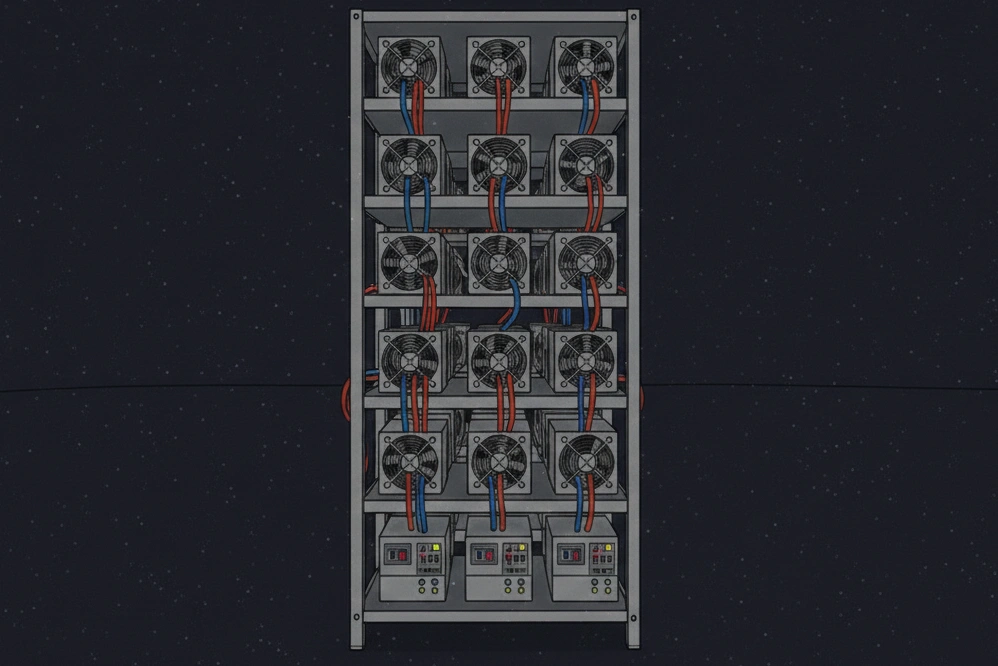
A modern mining farm in Russia is not a random pile of cables on a balcony. It is a structured engineering system designed for stable uptime, safe power delivery, and efficient heat removal. The core components usually include:
| Component | Role in the System |
|---|---|
| ASIC miners | Generate the computing power that produces hashrate. |
| Power supplies | Convert and deliver stable electrical power to the equipment. |
| Cooling system | Removes the massive amount of heat produced during nonstop operation. |
| Network equipment | Maintains a stable connection between the farm and the mining pool. |
| Control and monitoring tools | Enable remote management, alerts, and performance tracking. |
How to Start a Mining Farm
Launching a mining farm in current market conditions is a serious investment project. Mining has become a technology business where success depends on accurate energy-efficiency calculations, reliable infrastructure, and the quality of day-to-day operations.
What You Need to Build a Mining Farm
- A location with the right electricity tariff: Power is your main operating expense. Professional mining farms are usually built in regions with energy surplus, where the cost per kWh supports healthy margins.
- A properly prepared facility: The site should be dry, clean, and equipped with strong intake and exhaust ventilation. Dust and humidity are among the biggest threats to expensive mining chips and power units.
- Modern hardware: Choosing efficient ASIC miners matters. Older generations may look cheaper upfront, but high power consumption per terahash can weaken long-term profitability.
For a mining farm in Russia, local power economics, grid capacity, facility engineering, logistics, and internet stability all play a direct role in the final business model. In practice, the strongest projects are the ones that treat mining as infrastructure, not as a short-term experiment.
How to Make Money With Mining
Mining profit is the difference between the value of the cryptocurrency you mine and your operating costs, including electricity, rent, payroll, maintenance, and downtime. In 2026, the key factor behind a farm’s survival is energy efficiency.
How Much Money Can a Mining Farm Make?
Mining profitability changes constantly depending on the price of Bitcoin, network difficulty, equipment efficiency, and electricity costs. For operators paying roughly 3-4 RUB per kWh and using modern ASIC hardware, projected payback can fall in the 14-20 month range. At the same time, every calculation should be treated as dynamic: a stronger BTC price can improve returns, while rising difficulty or expensive power can extend the ROI period.
Why Choosing the Right Mining Pool Matters
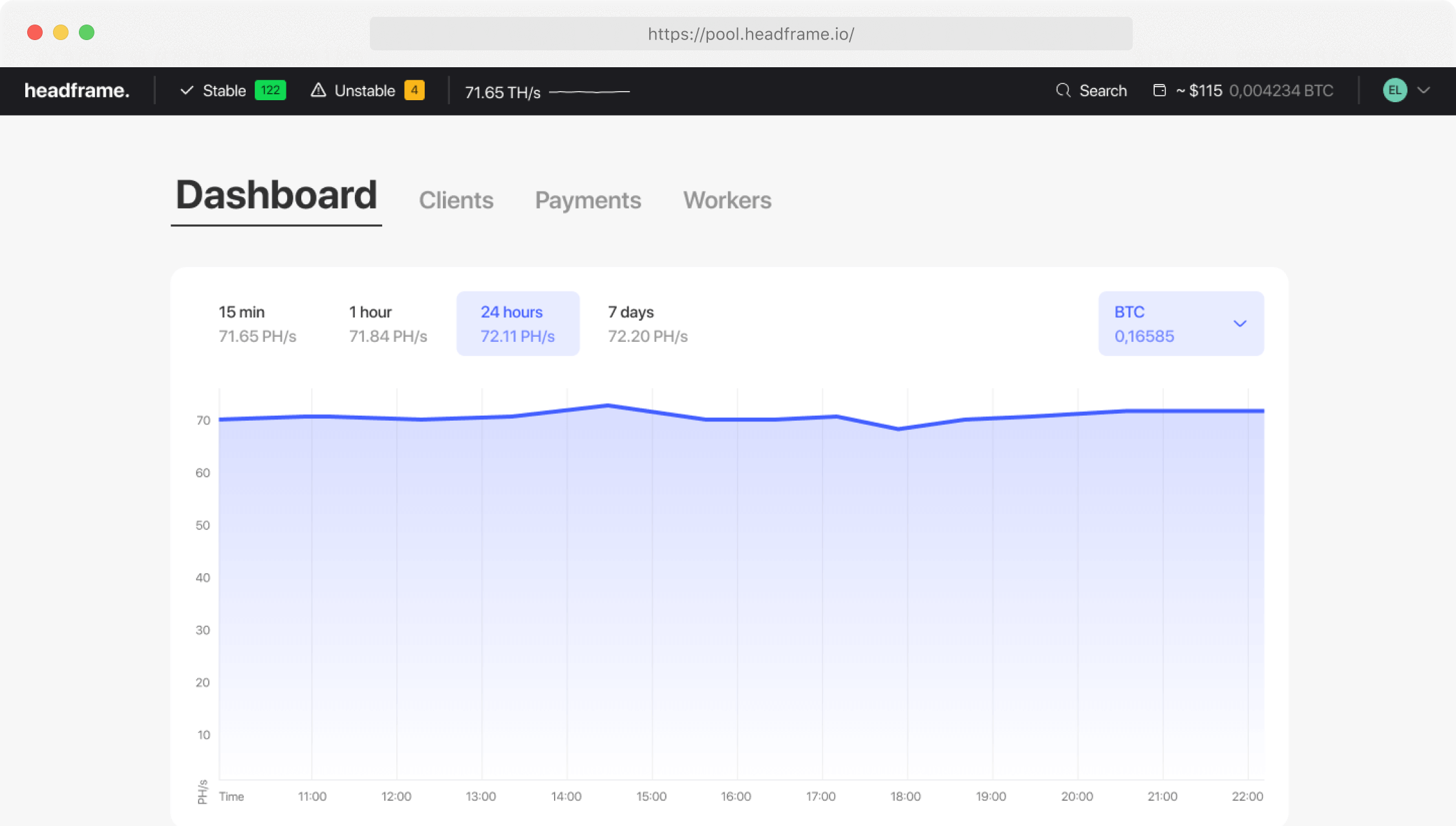
Even a large private mining farm usually does not have enough hashrate to find blocks consistently on its own. To make income more predictable and more stable, miners join pools. Headframe offers features that are especially relevant for miners who want transparent payouts and efficient day-to-day management:
- FPPS payout model: Headframe uses FPPS, which includes both block rewards and transaction fees in miner payouts, helping create more stable daily revenue.
- Competitive pool fee: The standard commission is 0.9%, which is strong for miners focused on net profitability.
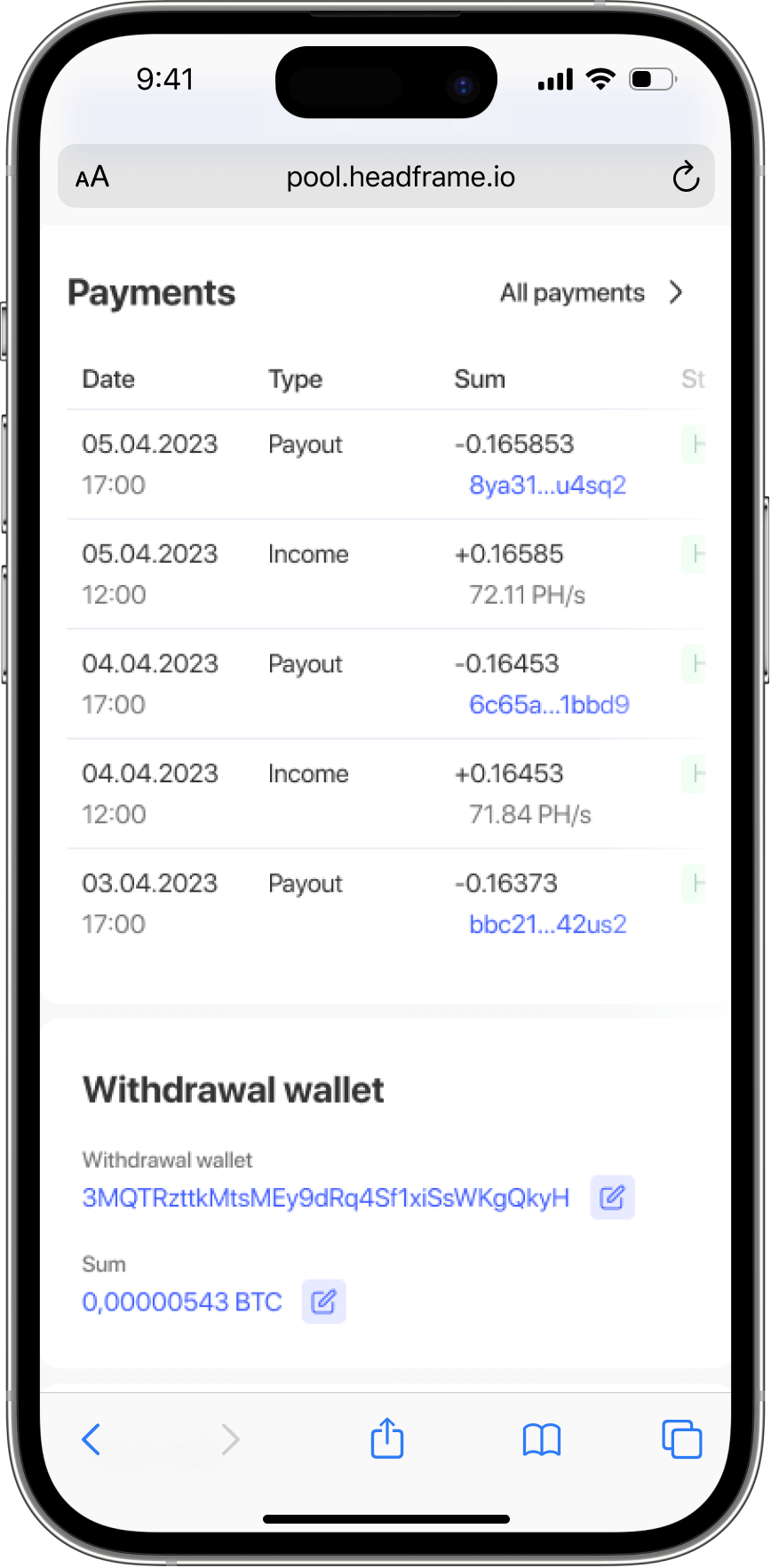
- Daily payouts: Regular payouts help operators manage cash flow and treasury planning more efficiently.
- Reliable infrastructure: Stable stratum connectivity and consistent uptime matter just as much as raw hashrate when you run a serious operation.
- Mobile monitoring: The Headframe app allows you to track key metrics in real time on App Store and Google Play.
Conclusion
In 2026, a mining farm is not just a set of machines. It is an intelligent business at the intersection of energy, infrastructure, and digital finance. Despite the growing complexity of the industry, Bitcoin mining remains one of the most transparent and reliable ways to accumulate digital assets. Your results depend on three factors above all: electricity cost, hardware efficiency, and the reliability of your mining pool. Start with Headframe to build a mining operation with stable payouts, professional support, and confidence in every satoshi you mine.
Bitcoin mining farms are infrastructure businesses as much as hardware businesses. A crypto mining farm needs power capacity, cooling design, network redundancy, monitoring, spare parts and clear operating rules. The difference between a profitable bitcoin mining farm and an unstable one is usually operational discipline: clean airflow, accurate metering, fast repairs, safe electrical design and transparent hashrate reporting. Headframe is useful when a mining farm needs to monitor many workers, compare real hashrate with expected output and keep pool-side data visible to operators and clients. Bitcoin mining farms are facilities that run many ASIC miners with dedicated power, cooling, networking and monitoring. A crypto mining farm is a facility built to mine proof-of-work coins at scale. Power demand depends on the number of ASIC miners, their wattage and cooling overhead. Profitability depends on hardware efficiency, electricity price, uptime, pool fee, coin price and maintenance cost. Monitoring helps detect offline workers, hashrate drops, overheating and rejected shares before they reduce revenue. Mining Farm Operating Checklist
Mining Farm Infrastructure
Signal What to check Power Transformer capacity, metering, breakers and safe cabling. Cooling Airflow, filters, hot aisle control or immersion design. Network Stable internet, low latency to pools and failover routes. Monitoring Worker status, hashrate, rejects, temperature and uptime. Finance Electricity tariff, hardware depreciation, pool fee and maintenance. Internal Links for the Next Step
FAQ
What are bitcoin mining farms?
What is a crypto mining farm?
How much power does a bitcoin mining farm need?
What makes a mining farm profitable?
Why does farm monitoring matter?