What Is Mempool? How the Bitcoin Mempool Works
- What Is Mempool in Simple Terms?
- How the Mempool Works: A Transaction’s Path Step by Step
- Why the Mempool Matters
- What Causes Mempool Congestion?
- Transaction Priority: Why Some Transfers Confirm Faster
- How to Check the Mempool and BTC Fees
- What to Do If Your Transaction Is Stuck
- Mempool in Bitcoin vs Ethereum vs Solana
- Why the Mempool Matters for Miners
- Conclusion
In crypto, transactions can be sent in seconds, but they are not always confirmed that quickly. Between the moment you click “Send” and the moment a transaction is written into the blockchain, there is an invisible waiting area known as the mempool.
If you have ever wondered why a Bitcoin transaction is delayed or why BTC fees suddenly spike, the answer is usually found there. Understanding the Bitcoin mempool helps you send transactions more efficiently, avoid overpaying in fees, and better understand how network congestion affects both users and miners.
What Is Mempool in Simple Terms?
Mempool is short for memory pool. In simple terms, it is the waiting room for transactions that have already been broadcast to the network but have not yet been included in a block.
A helpful analogy is a shipping warehouse. You place an order, it arrives at the warehouse, but the courier has not picked it up yet. In Bitcoin, miners play the role of that courier. They choose which pending transactions to include in the next block, and until that happens, the transactions sit in the mempool.
There is no single global mempool controlled by one central server. Instead, every full node maintains its own local list of unconfirmed transactions.
- Node verification: Nodes first check whether the transaction is valid, including signatures and available funds.
- Temporary storage: Valid transactions remain in node memory until they are mined into a block.
- Eviction under pressure: If the mempool becomes too full, nodes may begin dropping the lowest-fee transactions.
How the Mempool Works: A Transaction’s Path Step by Step
The mempool is a basic part of how blockchain transactions move through the network. A standard Bitcoin transaction usually follows this path:
- Creation: You open your wallet and send BTC. The wallet signs the transaction with your private key.
- Broadcast: The signed transaction is sent to nearby nodes.
- Validation: Nodes verify that the transaction is legitimate and does not attempt double spending.
- Entry into the mempool: Once verified, the transaction appears in local mempools across the network and remains unconfirmed.
- Miner selection: Miners review pending transactions and choose which ones to include in the next block, usually based on fee rate.
- Confirmation: When a block containing your transaction is mined, the transaction leaves the mempool and becomes confirmed on-chain.
Why the Mempool Matters
The mempool is one of the clearest indicators of network load and transaction demand. For ordinary users, it matters for three main reasons:
1. Fee planning. If the mempool is crowded, you will usually need to pay a higher fee to get confirmed quickly. If it is relatively empty, you may be able to send BTC much more cheaply.
2. Confirmation speed. When many transactions are competing for limited block space, low-fee payments can wait for hours or even longer.
3. Network visibility. Mempool activity helps users and analysts spot spikes in demand, congestion events, and potential spam pressure on the network.
During periods of sharp Bitcoin price movement, the mempool can expand very quickly as traders, exchanges, and large holders move funds at the same time.
What Causes Mempool Congestion?
Mempool congestion happens when the number of incoming transactions is greater than the amount of transaction data miners can fit into new blocks. The most common causes include:
| Factor | Description | Result |
|---|---|---|
| Market volatility | Traders rush funds between exchanges, wallets, and custodial platforms. | Fee rates rise quickly as demand for block space increases. |
| Lower mining throughput | If blocks are found more slowly for any reason, pending transactions accumulate faster. | The queue grows and confirmation times increase. |
| New protocol activity | Additional use cases on Bitcoin can create extra demand for on-chain space. | Ordinary payments must compete with more data-heavy transactions. |
| Daily and weekly traffic cycles | Network activity often changes with global market behavior and exchange flows. | Some periods are consistently busier than others. |
Transaction Priority: Why Some Transfers Confirm Faster
The core rule of the mempool is simple: higher fee rates usually get processed first. Miners are economically motivated to include transactions that maximize revenue per unit of block space.
What determines transaction priority?
- Fee rate, not transfer amount: The network does not care whether you are sending a small amount of BTC or a very large one. What matters is the fee per virtual byte, usually measured in sat/vB.
- Transaction size: More complex transactions take more space and usually require a higher total fee.
- Address format: SegWit and Taproot transactions are often more space-efficient, which can reduce the fee needed for the same priority level.
How to Check the Mempool and BTC Fees
If you want to avoid overpaying or getting stuck for too long, it helps to monitor the mempool before sending a transaction. One of the most widely used public tools is mempool.space.
When checking a mempool explorer, pay attention to:
- Recommended fee levels: Usually shown as low, medium, and high priority in sat/vB.
- Blocks pending: This estimate shows how many blocks away your fee level may be from confirmation.
- Total mempool size: A large backlog usually means higher competition for space.
For anyone who sends BTC regularly, watching the mempool before broadcasting a transaction can save both time and money.
What to Do If Your Transaction Is Stuck
If your fee was too low and the transaction remains unconfirmed, do not panic. In most cases, the funds are not lost. The transaction will either confirm later or eventually be dropped from node mempools if it stays unconfirmed for too long. There are also a few ways to speed things up.
1. Replace-By-Fee (RBF)
If your wallet supports RBF, you can resend the same transaction with a higher fee. Nodes and miners will treat the higher-fee version as the preferred one.
2. Child Pays For Parent (CPFP)
CPFP allows a follow-up transaction to pay a high enough fee that miners are incentivized to include both the new transaction and the older unconfirmed one.
3. Transaction Accelerators
Some mining pools and infrastructure providers offer transaction acceleration tools that can help prioritize certain pending transfers. Availability and conditions vary by provider.
Mempool in Bitcoin vs Ethereum vs Solana
The idea of a transaction waiting area exists in different forms across major blockchains, but the implementation is not the same everywhere.
- Bitcoin: The classic mempool model. Blocks arrive roughly every 10 minutes, and fee competition for block space is a central part of the system.
- Ethereum: Ethereum also has a transaction pool, but fee dynamics are shaped by its own gas market and protocol rules, making mempool analysis more complex.
- Solana: Solana handles transaction forwarding differently and is not usually described through the same classic mempool model as Bitcoin.
Why the Mempool Matters for Miners
For miners, the mempool is not just a queue. It is also a revenue signal. When the mempool is crowded and users compete for confirmation, transaction fees rise. In payout systems like FPPS, that fee activity can directly matter because transaction fees are included alongside the block subsidy.
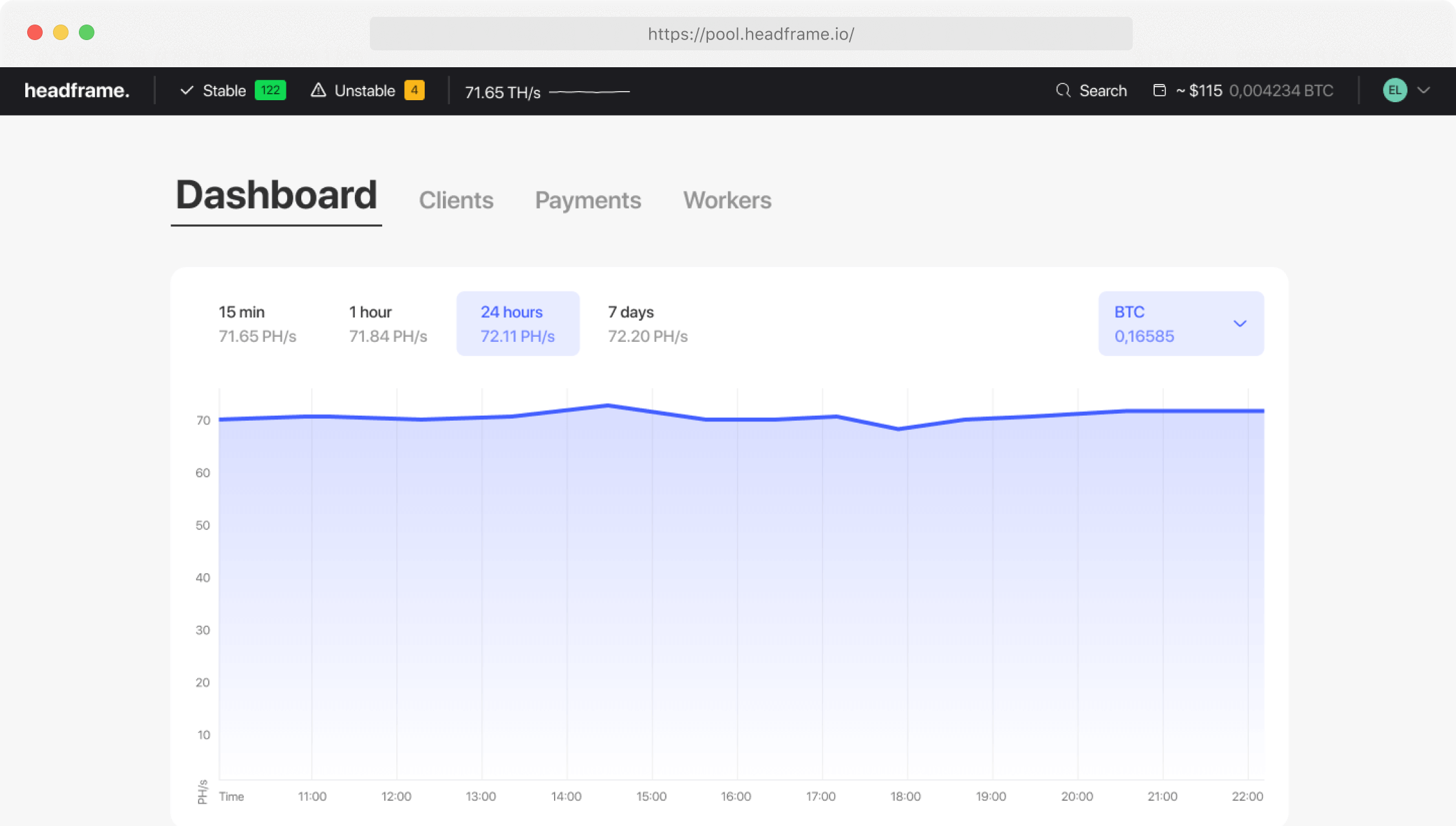
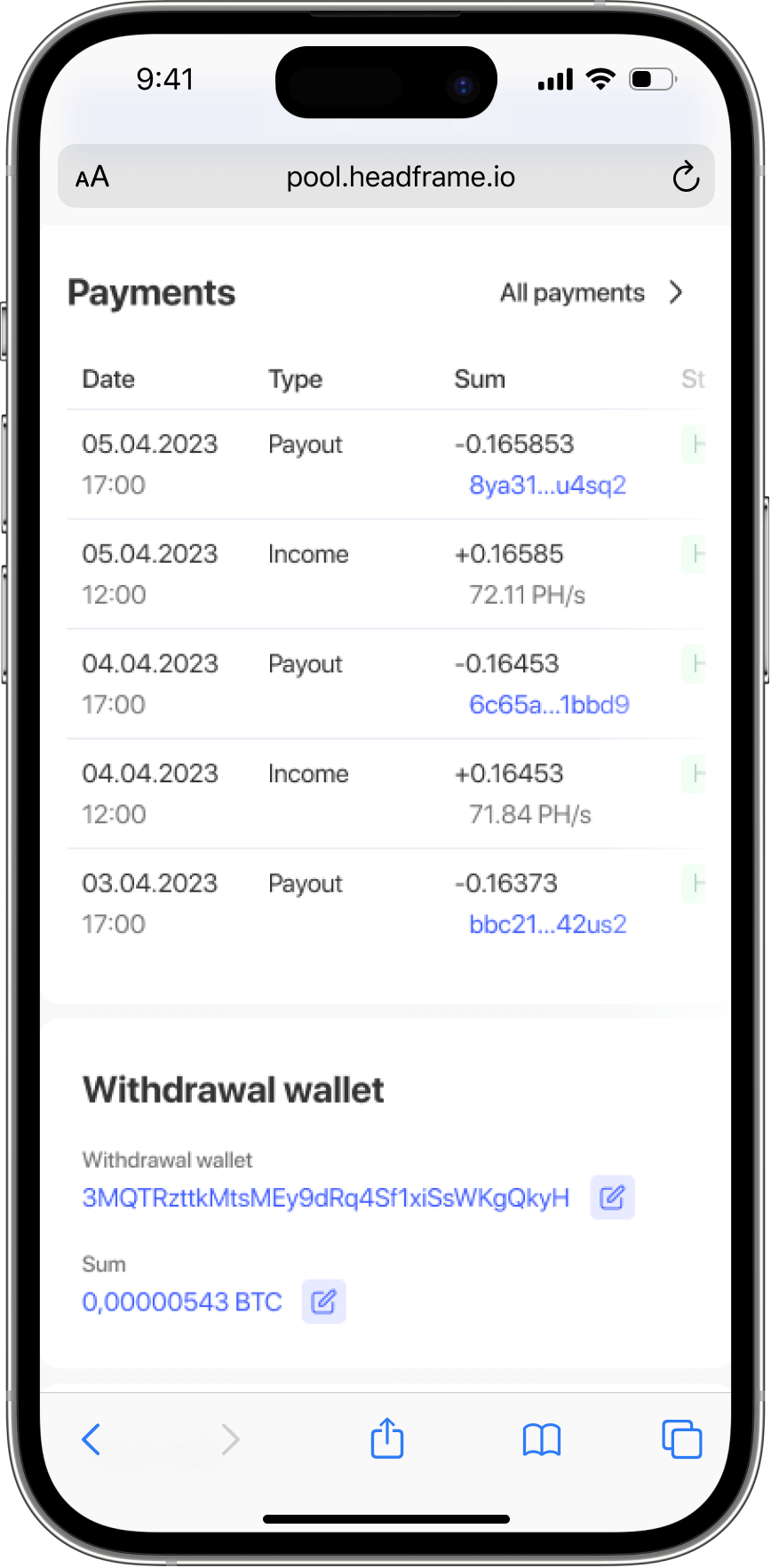
This is one reason many professional miners pay close attention not only to hashrate and power efficiency, but also to pool structure. Headframe’s official materials describe FPPS payouts, a 0.9% pool fee, and daily rewards, which can help miners capture full transaction-fee participation more predictably.
Conclusion
The mempool is the heartbeat of a blockchain network. It shows how busy the network is, how expensive block space has become, and how quickly transactions are likely to confirm.
Here are the key takeaways:
- Mempool is the temporary storage area for unconfirmed transactions.
- Fee rate is the main factor that determines confirmation priority.
- Mempool monitoring helps users send BTC more efficiently and avoid unnecessary fees.
- For miners, a busy mempool often means stronger transaction-fee revenue.