Most Expensive Cryptocurrency: Price vs Market Cap
- Most Expensive Cryptocurrency Today: Price vs Market Cap
- Top Cryptocurrencies by Price per Coin
- Why Bitcoin Is Still the Biggest and Most Valuable Cryptocurrency
- Largest Cryptocurrencies by Market Capitalization
- Most Expensive Cryptocurrency in Fiat Terms
- What Determines the Price of a Cryptocurrency?
- Fast-Growing and High-Potential Cryptocurrencies
- Which Expensive Cryptocurrencies Are Worth Buying?
Most Expensive Cryptocurrency Today: Price vs Market Cap
The digital asset market has become far more mature, yet many beginners still make the same mistake: they confuse the price of one coin with the real size of a project. To understand which cryptocurrency is truly the most expensive, you need to look at two key metrics: price and market capitalization.
Price is the amount you pay for a single coin or token at a given moment. That price may be tens of thousands of dollars or only a fraction of a cent. Market capitalization, however, is the total market value of all coins in circulation. It is calculated by multiplying the price by the circulating supply. In practice, market cap is what shows how large and influential a cryptocurrency really is.
Today, Bitcoin remains the largest cryptocurrency in the world. Even though some assets may trade at a higher price per unit, Bitcoin still leads the market in capital invested, liquidity, and institutional trust. That is why it continues to dominate the discussion whenever people ask which crypto is the biggest, strongest, and most expensive in real-world terms.
Top Cryptocurrencies by Price per Coin
If you build a ranking based only on the price of one coin, the list can look unusual. The most expensive cryptocurrencies by unit price are not always the same assets that dominate the market by capitalization.
| Cryptocurrency | Ticker | Approximate Price ($) | Key Feature |
|---|---|---|---|
| Bitcoin | BTC | $85,000 – $95,000 | The market benchmark and “digital gold” |
| Wrapped Bitcoin | WBTC | ~$90,000 | A tokenized version of BTC on Ethereum |
| PAX Gold | PAXG | ~$2,500 | A token backed by physical gold |
| Ethereum | ETH | $4,500 – $5,500 | The leading smart contract platform |
| Maker | MKR | ~$3,200 | The governance token behind the DAI ecosystem |
It is important to remember that a high price per coin does not automatically make an asset a better investment. Some cryptocurrencies are expensive simply because they have a very limited supply. That can inflate the unit price without making the project more important on a global scale.
Why Bitcoin Is Still the Biggest and Most Valuable Cryptocurrency
Bitcoin continues to hold its position as the clear market leader. It is still the foundation of the crypto economy and remains the first asset most investors think of when they hear the phrase most expensive cryptocurrency.
- Decentralization and security: Bitcoin is protected by one of the strongest computing networks ever built. Attacking the network is economically and technically unrealistic.
- Limited supply: Only 21 million BTC will ever exist. This scarcity is one of the main reasons long-term investors continue to value it so highly.
- Institutional adoption: Bitcoin has become the main entry point for large funds, public companies, and long-term capital.
- Mining infrastructure: A massive global industry of ASIC manufacturers, mining farms, and data centers is built around Bitcoin alone. For miners, choosing the right BTC mining pool is essential for stable payouts and reliable infrastructure.
Bitcoin also remains the most liquid and widely recognized cryptocurrency on the market. It can be traded, stored, and transferred almost anywhere in the world, which gives it an advantage that many smaller projects still cannot match.
Largest Cryptocurrencies by Market Capitalization
A ranking by market capitalization gives a much clearer picture of where the biggest money in crypto is concentrated. The top projects by market cap are not just payment coins – they are also major infrastructure layers for the entire digital asset ecosystem.
- Bitcoin (BTC) – the undisputed market leader.
- Ethereum (ETH) – the foundation of DeFi, NFTs, and smart contracts.
- Tether (USDT) – the dominant stablecoin for liquidity and trading.
- Solana (SOL) – a fast blockchain for scalable applications.
- BNB – the core asset of a major exchange ecosystem.
- XRP – focused on payments and financial settlement solutions.
- Lido Staked Ether (stETH) – a major asset in liquid staking.
- USDC – a widely used regulated stablecoin.
- Cardano (ADA) – a research-driven blockchain platform.
- Avalanche (AVAX) – a scalable network for custom blockchain environments.
- Other important names include Polkadot, Chainlink, and TRON.
This ranking changes over time, but the leading assets tend to remain stable for long periods. Investors often use market cap to evaluate risk: the larger the capitalization, the harder it is for any single participant to manipulate the price.
Most Expensive Cryptocurrency in Fiat Terms
When people ask which cryptocurrency is the most expensive in real money terms, the answer is still Bitcoin. If one BTC trades near the top of the market range, its price can exceed the value of almost any other mainstream digital asset by a very wide margin.
Ethereum usually comes second in absolute price among the best-known large-cap cryptocurrencies, but there is still a substantial gap between ETH and BTC. This is one reason Bitcoin is still treated as the flagship asset of the market, while Ethereum is viewed more as the leading technology platform.
For investors and miners alike, Bitcoin often functions as both a growth asset and a long-term store of value. That combination keeps it at the center of the crypto market even as new narratives and new token sectors emerge.
What Determines the Price of a Cryptocurrency?
Why is one cryptocurrency expensive while another trades at only a few cents? The answer usually comes down to a mix of supply, demand, utility, and market confidence.
- Supply and demand: Scarce assets with strong demand tend to rise in price faster.
- Utility: The more useful a token is within its ecosystem, the more sustainable its demand can become.
- Mining or production cost: For proof-of-work coins, energy and hardware costs create a natural economic floor over time.
- Exchange availability: Assets listed on major trading platforms are easier to buy and sell, which improves liquidity and can support valuation.
That is why the most expensive cryptocurrency is rarely just a matter of branding or hype. In most cases, high value comes from a combination of scarcity, network strength, liquidity, and real market demand.
Fast-Growing and High-Potential Cryptocurrencies
Beyond the largest established assets, investors are always looking for the next fast-growing crypto. The strongest performers are often found in newer categories that attract fresh capital and attention.
- AI-related tokens: Projects connected to decentralized compute, machine learning, and AI infrastructure.
- Layer 2 solutions: Networks designed to scale Bitcoin or Ethereum more efficiently.
- RWA tokens: Digital assets linked to real-world assets such as property, commodities, or securities.
Still, high growth usually comes with high risk. A coin that rises quickly can also fall just as fast. That is why the most popular short-term winners are not always the most reliable long-term investments.
Which Expensive Cryptocurrencies Are Worth Buying?
When building a long-term portfolio, most investors take a conservative approach. The strongest portfolios are usually centered around assets with deep liquidity, established infrastructure, and large market capitalization.
- Bitcoin (BTC) – the core asset of almost any serious crypto portfolio.
- Ethereum (ETH) – the leading smart contract ecosystem.
- Solana (SOL) – a major bet on speed and user growth.
- Chainlink (LINK) – a critical bridge between blockchains and real-world data.
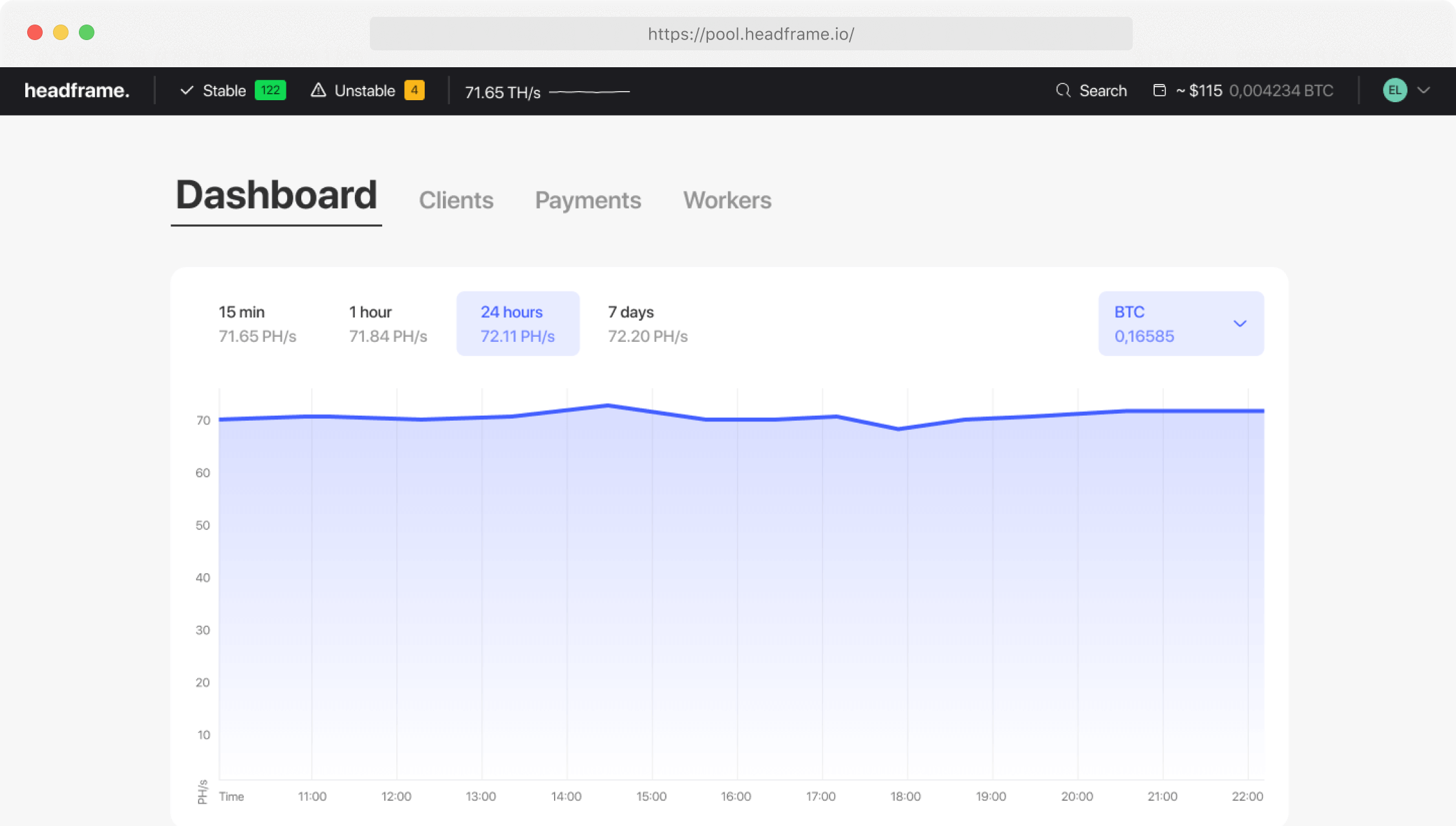
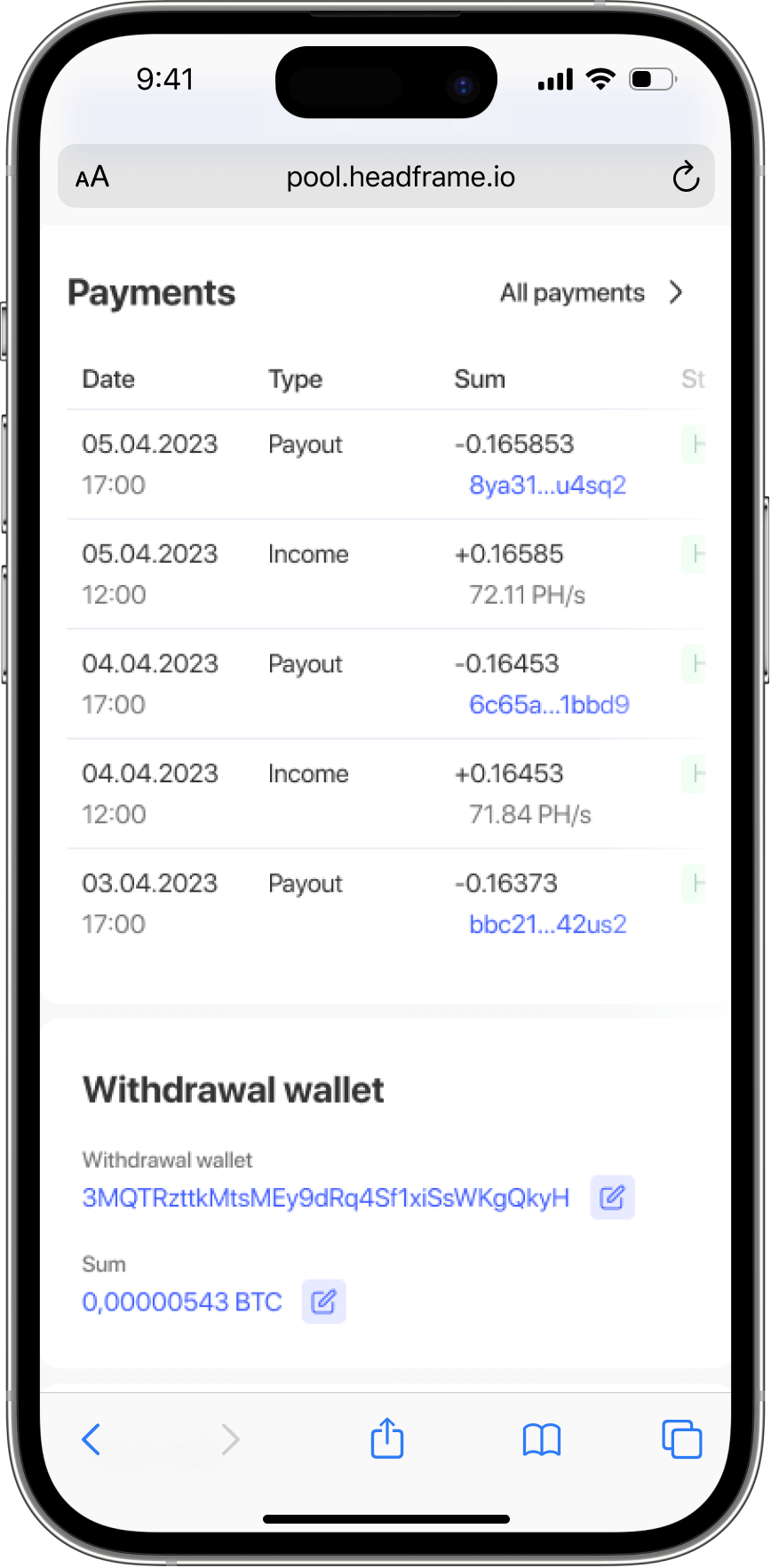
For those who want to do more than simply buy and hold, mining remains one of the most practical ways to accumulate Bitcoin directly. Headframe provides professional conditions for miners who want stable BTC payouts with ASIC hardware and transparent FPPS accounting.
With Headframe, your income includes not only the block reward but also a share of network transaction fees. Combined with a pool fee of just 0.9% and free daily payouts, this creates an efficient setup for serious miners. Reliable stratum infrastructure and a convenient mobile app help you monitor performance in real time and maximize the value of every unit of hashrate.