What Is Hashrate? Meaning, Mining Hashrate and Charts
- What Is Hashrate in Simple Terms?
- Hashrate Units: From MH/s to EH/s
- What Affects Your ASIC Hashrate?
- Network Hashrate and Mining Difficulty
- Why Energy Efficiency Matters More Than Raw Hashrate
- Where to Check Your Hashrate
- How to Increase Hashrate Safely
- Why Investors Watch Bitcoin Hashrate
- Conclusion: How to Evaluate Hashrate Properly
- Hashrate Meaning in Practical Mining
- How to Read Hashrate Data
- Internal Links for the Next Step
- FAQ
Bitcoin mining has grown from an enthusiast hobby into a highly competitive technology industry, and one metric still defines performance more than any other: hashrate.
If you want to understand mining profitability, compare ASIC miners, or choose the right pool, you first need to understand what hashrate means, how it is measured, and why effective hashrate matters more than the number printed on a spec sheet.
What Is Hashrate in Simple Terms?
Hashrate is a measure of the computing power used in cryptocurrency mining. Put simply, it is the speed at which your ASIC miner tries to solve the cryptographic puzzle required to add a new block to the Bitcoin blockchain.
Each attempt is a hash calculation. Bitcoin runs on the SHA-256 algorithm, and the more hashes your machine can perform every second, the greater its chance of contributing to a valid block. In solo mining, that chance is tiny for most miners, which is why operators usually connect to a mining pool and combine their computing power to receive more stable payouts.
A simple analogy is a lottery where the winner is the person who can check the most tickets per second. Your hashrate determines how many “tickets” your miner can process every moment.
Hashrate Units: From MH/s to EH/s
Because modern ASIC miners operate at enormous speeds, hashrate is measured with decimal prefixes. In Bitcoin mining, the most common unit for individual machines is now TH/s, while the total network hashrate is discussed in EH/s.
| Unit | Abbreviation | Hashes Per Second |
|---|---|---|
| Megahash | MH/s | 1,000,000 |
| Gigahash | GH/s | 1,000,000,000 |
| Terahash | TH/s | 1,000,000,000,000 |
| Petahash | PH/s | 1,000,000,000,000,000 |
| Exahash | EH/s | 1,000,000,000,000,000,000 |
A modern Bitcoin ASIC miner usually operates in the hundreds of terahashes per second, while the entire Bitcoin network runs at an exahash-scale level. That is one of the main reasons the network is so difficult to attack.
What Affects Your ASIC Hashrate?
Hashrate is not a perfectly static value. Even if your miner is rated for a certain output, the real figure shown by the pool can move up or down depending on operating conditions.
- Chip process and hardware generation: Newer ASIC chips usually deliver better performance and better energy efficiency.
- Power quality: Voltage drops, unstable wiring, or overloaded circuits can reduce performance or trigger restarts.
- Cooling: When chips overheat, miners can throttle frequency to protect the hardware, which lowers hashrate.
- Firmware: Custom firmware can improve tuning, unlock overclocking, or optimize efficiency, but it must be used carefully.
- Internet stability and latency: If your shares reach the pool too slowly, part of your effective hashrate can be lost.
Network Hashrate and Mining Difficulty
Many beginners assume that if they double their hashrate, they will automatically double their Bitcoin income forever. In reality, mining rewards depend not only on your machine but also on the total Bitcoin network hashrate and the network’s mining difficulty.
Bitcoin is designed to produce a new block about every 10 minutes. When more miners join the network and total hashrate rises, blocks are found faster. To restore the target pace, the protocol automatically increases mining difficulty at regular intervals.
The relationship is simple:
Higher network hashrate → Higher difficulty → Lower BTC yield per 1 TH/s
That is why payout structure matters so much. Pools using the FPPS model can be especially attractive because payouts include both the block subsidy and transaction fee component, helping miners capture the full value of their contributed hashrate.
Why Energy Efficiency Matters More Than Raw Hashrate
Professional miners do not judge hardware by hashrate alone. They also look closely at J/TH, or joules per terahash. This metric shows how much energy an ASIC consumes to produce 1 TH/s of hashrate.
That matters for two big reasons:
- Power limits: Many locations have a fixed electrical capacity, so more efficient hardware lets you generate more hashrate within the same limit.
- Electricity cost: When market conditions weaken, inefficient machines lose profitability first.
Example:
Miner A: 100 TH/s at 3500 W
Miner B: 200 TH/s at 3500 W
At the same electricity cost, Miner B produces far more computing power for the same energy bill. That is why efficiency is often more important than headline hashrate alone.
Where to Check Your Hashrate
There are usually three different ways to monitor hashrate, and they do not always show the same number:
- Local hashrate: The reading shown in the ASIC miner’s web interface. This is the machine’s live internal output.
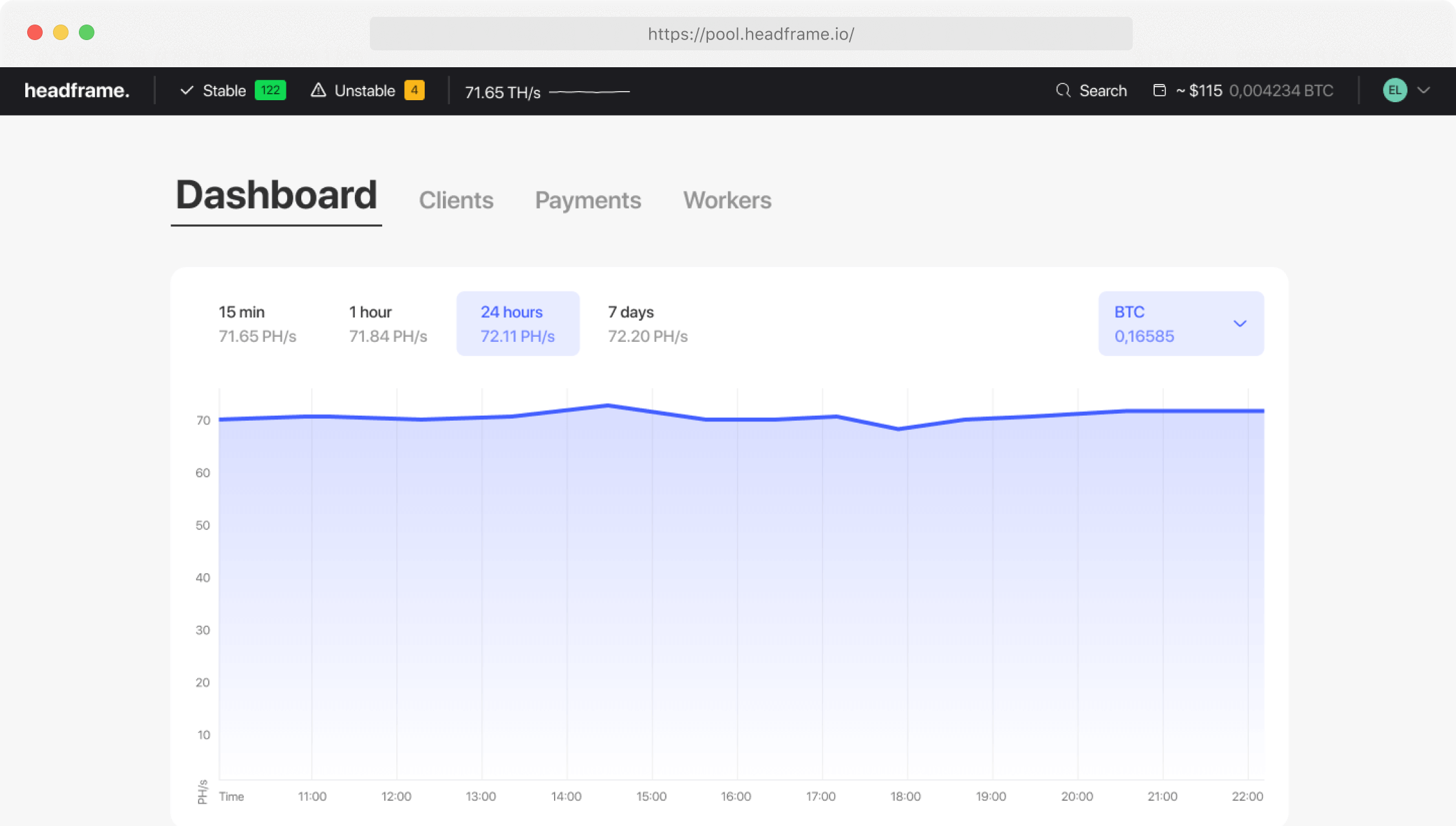
- Effective pool hashrate: The hashrate calculated by the pool based on accepted shares over time. This is the most important figure for revenue.
- Remote monitoring tools: Useful for operators with multiple devices or large mining farms who need alerts, analytics, and centralized oversight.
If your local hashrate looks healthy but your pool hashrate is low, the issue is often not the chips themselves but connectivity, rejected shares, thermal throttling, or unstable power delivery.
How to Increase Hashrate Safely
You do not always need to buy new hardware to improve mining results. In many cases, better tuning and better infrastructure can raise your effective performance.
1. Improve Cooling
Better airflow, cleaner heatsinks, and stable intake temperatures can help ASIC miners sustain their rated performance for longer periods without throttling.
2. Use Custom Firmware Carefully
Advanced firmware can allow voltage and frequency tuning, chip-level control, and better balance between efficiency and speed. The tradeoff is that poor settings can increase stress on the power supply and hardware.
3. Optimize Network Routing
Sometimes the pool shows lower effective hashrate because of a high rejection rate. A more stable connection and lower latency to the stratum server can improve accepted share delivery.
4. Consider Immersion Cooling
In professional environments, immersion cooling can reduce noise, improve thermal stability, and support higher performance without the same overheating risk as traditional air cooling.
Why Investors Watch Bitcoin Hashrate
Hashrate is not only a technical metric for miners. It is also an important market signal for investors and analysts.
- Rising hashrate: Often suggests that miners are continuing to invest in infrastructure and expect long-term value in the network.
- Miner capitulation: A drop in hashrate can happen when weaker operators shut down unprofitable machines during tough market conditions.
- Network security: A higher hashrate makes it much more expensive to attack the Bitcoin network, which strengthens confidence in the system.
Conclusion: How to Evaluate Hashrate Properly
Hashrate is not just a number on a dashboard. It reflects the combined effect of hardware quality, power stability, cooling, internet performance, and pool efficiency.
To get the most from your Bitcoin mining operation, focus on three things:
- Track efficiency, not just TH/s: J/TH is one of the most important profitability metrics in real mining operations.
- Choose a transparent FPPS pool: A predictable payout model and low fees help you keep more of the value your machines generate.
- Monitor equipment continuously: Remote visibility helps you react quickly to downtime, overheating, and hashrate drops.
ASIC mining remains a demanding but transparent business. In the long run, the miners who win are the ones who know how to measure performance correctly and make every terahash work as efficiently as possible.
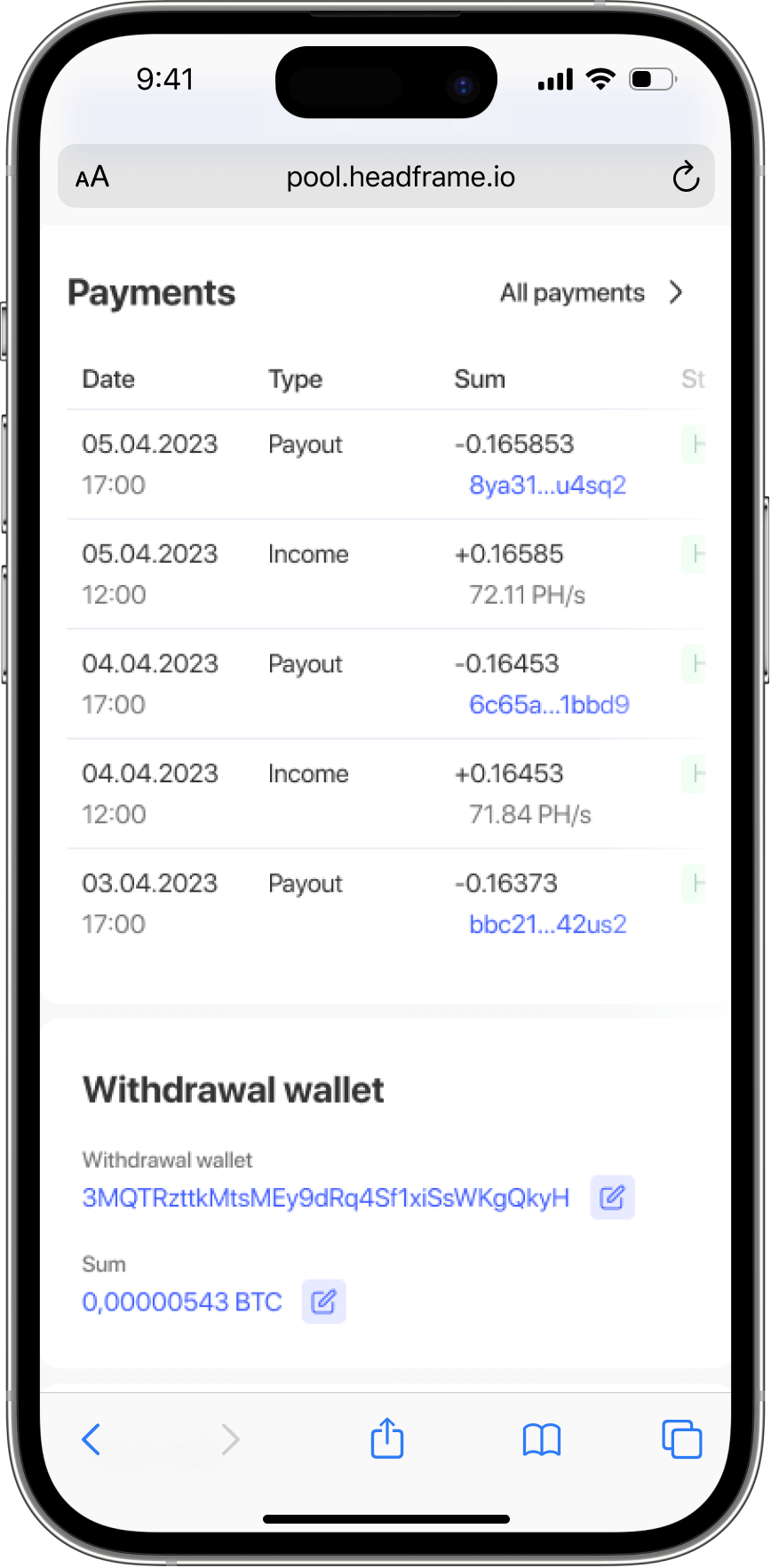
Need help connecting ASIC miners or improving pool-side performance? Headframe provides FPPS payouts, a 0.9% pool fee, daily rewards, and tools for monitoring hashrate more effectively.
Hashrate meaning is simple: it is the number of hash attempts a miner, pool or network performs per second. In hashrate mining analysis, the key is not the biggest number on a brochure, but the stable accepted hashrate shown by the pool. A hashrate chart can describe one ASIC, a pool or the whole Bitcoin network. Device charts help diagnose firmware, temperature and reject issues. Network charts show how much competition miners face. When hashrate rises while Bitcoin price stays flat, mining difficulty often follows. That can lower revenue per TH/s, so miners should compare hashrate with difficulty, power cost and pool fee. Hashrate means hash calculations per second. In mining, it measures how fast hardware searches for valid hashes. Hashrate mining is the practical use of computing power to participate in proof-of-work block production. Use a hashrate chart to spot unstable devices, rejected shares, cooling problems and changes in network competition. Pool-side hashrate counts accepted shares, so stale shares, network latency or unstable firmware can reduce the displayed value. No. Profit also depends on electricity cost, difficulty, price, pool fee and uptime. Hashrate Meaning in Practical Mining
How to Read Hashrate Data
Signal What to check Rated hashrate Manufacturer output under test conditions. Real hashrate What the miner actually produces at your site. Pool-side hashrate Accepted shares measured by the mining pool. Hashrate chart A time-series view that shows drops, spikes and stability. Network hashrate Estimated total computing power securing a proof-of-work network. Internal Links for the Next Step
FAQ
What is hashrate meaning?
What is hashrate mining?
How do I use a hashrate chart?
Why is pool-side hashrate lower than device hashrate?
Does higher hashrate always mean higher profit?