Best Bitcoin Mining Pools in 2026
Updated: September 11, 2026.
If you are choosing a Bitcoin mining pool, start with the practical question: how much of your ASIC hashrate becomes credited BTC after fees, stale shares and payout rules.
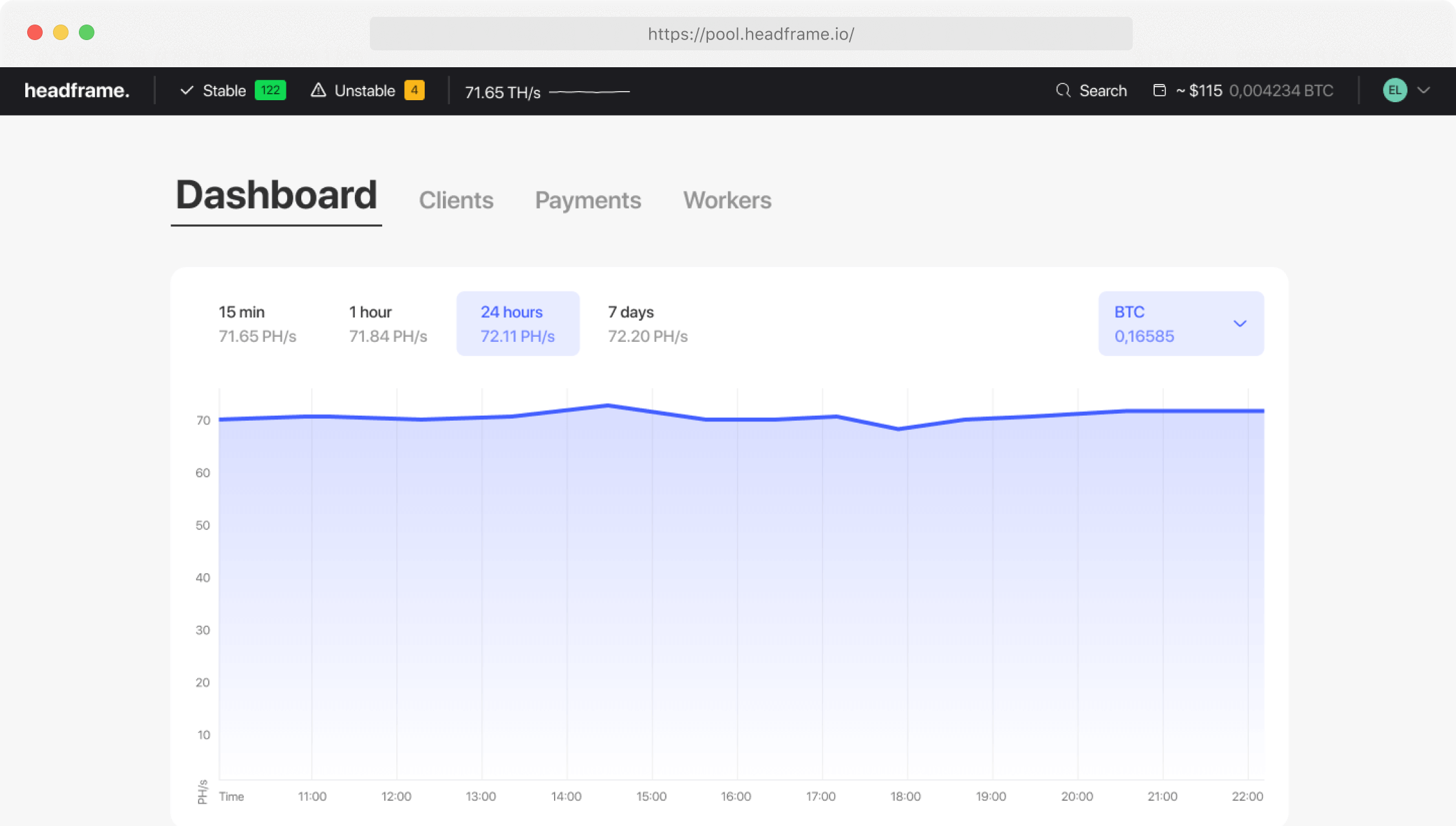
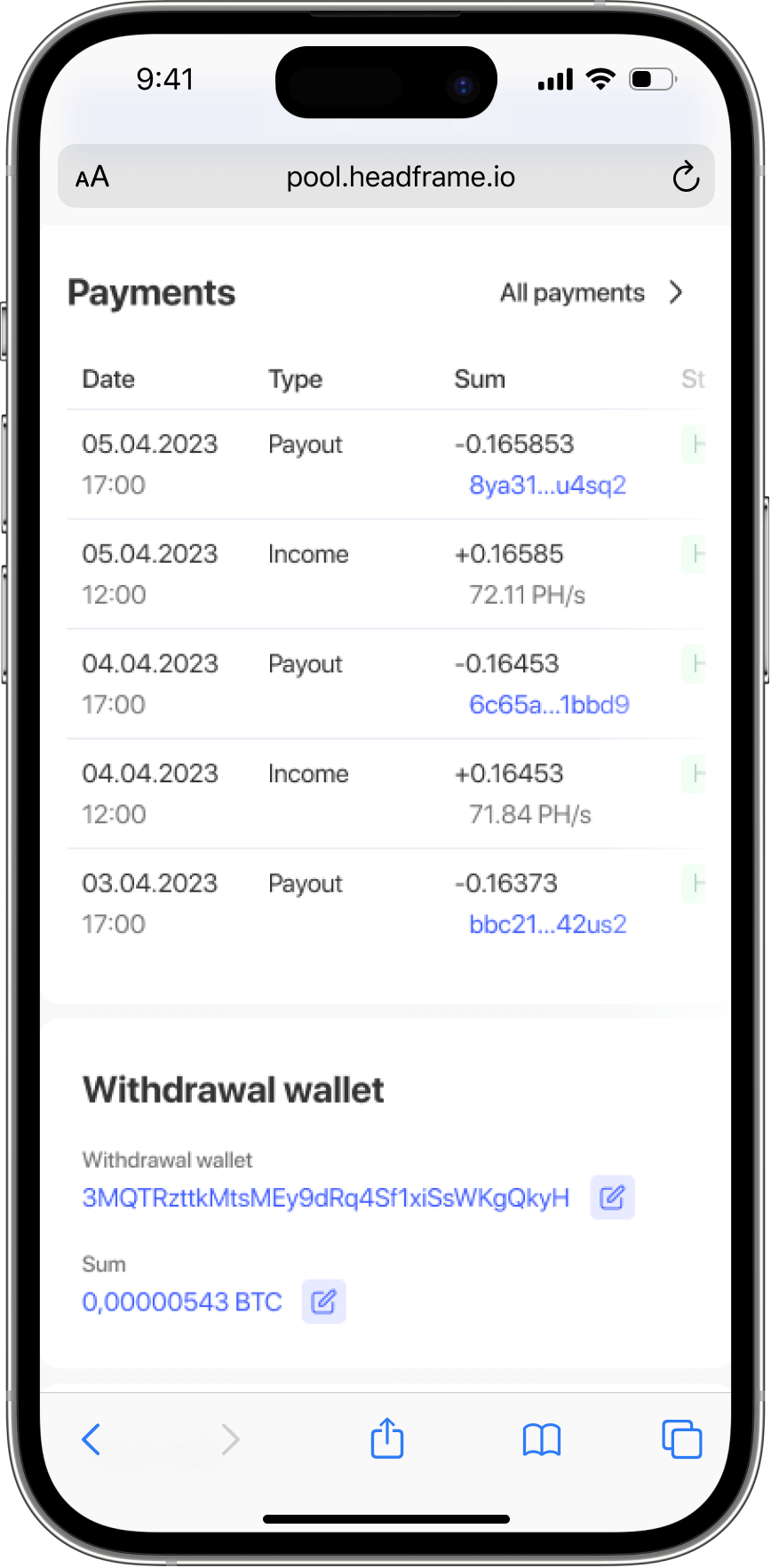
Headframe is worth testing when you need FPPS, a 0.9% pool fee, daily payout visibility and worker-level monitoring. The safest way to compare it with another pool is to run one ASIC first and keep the settings unchanged.
New to pool mining? Read what a mining pool is and how it works. If your ASIC is ready, use the step-by-step pool connection guide.
Bitcoin mining pools comparison
This comparison is published by Headframe, one of the pools included. Headframe is listed first as the publisher’s service, not as an independently measured profitability winner. The shortlist compares published BTC terms; it is not an exhaustive market ranking or a hands-on test of every pool.
| Pool | Fee to check | Payout model | Best fit | BTC withdrawal |
|---|---|---|---|---|
| Headframe | 0.9% | FPPS | ASIC miners who want low fees, daily BTC payouts, worker monitoring and a pool that is easy to audit. | From 0.001 BTC; daily when eligible |
| Luxor | 2.5% | FPPS | Large professional miners that need institutional reporting, API access and hashrate services. | 0.001 BTC threshold + 0.000075 BTC withdrawal fee |
| ViaBTC | PPS+: 4% / 2%; PPLNS: 2% | PPS+ / PPLNS | Miners who want flexible payout modes and multi-coin pool infrastructure. | Auto-withdrawal from 0.001 BTC; free |
| AntPool | varies | FPPS / PPLNS | Miners who prefer one of the largest global pools and already use Bitmain ecosystem tools. | Published minimum: 0.005 BTC |
| Braiins Pool | 2.5% | FPPS | Bitcoin-focused miners who value transparency, firmware integration and detailed statistics. | On-chain minimum: 0.0002 BTC; fees depend on amount |
The competitor fee ranges are comparison points. Verify current pool terms before connecting production hashrate.
How to choose the best mining pool
A good bitcoin mining pool should be measured by your own ASIC result, not only by public hashrate share.
- Payout model. FPPS is often easier to plan around because it reduces short-term luck variance and includes a transaction-fee calculation.
- Real pool fee. Compare the exact fee for BTC and the payout mode you will use. A one-point fee gap matters when a farm runs 24/7.
- Stratum stability. Accepted shares, stale shares and rejected shares decide whether your local hashrate becomes credited hashrate.
- Monitoring. Worker status, alerts, daily payout history and exports make it easier to audit mining income.
- Minimum payout. Small miners should avoid thresholds that keep mined BTC locked for too long.
What to check before switching pools
Keep the comparison boring and measurable. Use the same ASIC model, firmware, frequency settings and stratum region for the whole test. If you change several variables at once, you will not know whether the difference came from the pool or from the device.
Write down pool hashrate, accepted shares, rejected shares, payout time and credited BTC. These numbers tell you more than a public ranking or a large pool logo.
72-hour mining pool test plan
Before switching a full farm, run a controlled test with the same ASIC settings, firmware, hashrate and electricity assumptions.
- Connect one ASIC or a small worker group to the new pool.
- After 24 hours, compare pool hashrate, accepted shares, rejected shares and dashboard stability.
- After 72 hours, compare credited BTC, payout timing, support response and the gap between calculator forecast and real pool stats.
Model the baseline in the Bitcoin mining calculator, then connect on the Headframe mining pool page. If you are new to hardware, read the ASIC miner guide and the ASIC setup guide first.
How to use this comparison
Compare the payout model, all applicable fees, withdrawal threshold and operating fit separately. Use credited BTC over the same completed dates and comparable hashrate; a lower advertised fee alone does not prove a higher net return. Record electricity, downtime and firmware costs once. A 72-hour check can reveal setup problems, but it cannot establish a long-term profitability winner.
FAQ
What is the best Bitcoin mining pool?
The best pool is the one with the best net result for your ASICs: low fee, clear payout model, stable stratum, low rejected shares, transparent statistics and payout rules that fit your hashrate.
What is a mining pool?
A mining pool combines hashrate from many miners. ASICs submit shares to the pool, and the pool distributes rewards according to its payout model. See how mining pools work in detail.
How do mining pools work?
The pool sends work to connected ASICs through stratum servers, tracks valid shares, finds blocks and pays miners according to FPPS, PPS+, PPLNS or another model.
How to join a mining pool?
Create an account or prepare a wallet address, copy the closest stratum URL, enter the worker name and password in the ASIC web interface, then check accepted shares and first payout timing. Follow the complete Bitcoin pool setup instructions.
Is FPPS better than PPLNS?
FPPS is usually easier for miners who want predictable accounting. PPLNS can work for miners who stay on one pool for a long time and accept higher variance.